

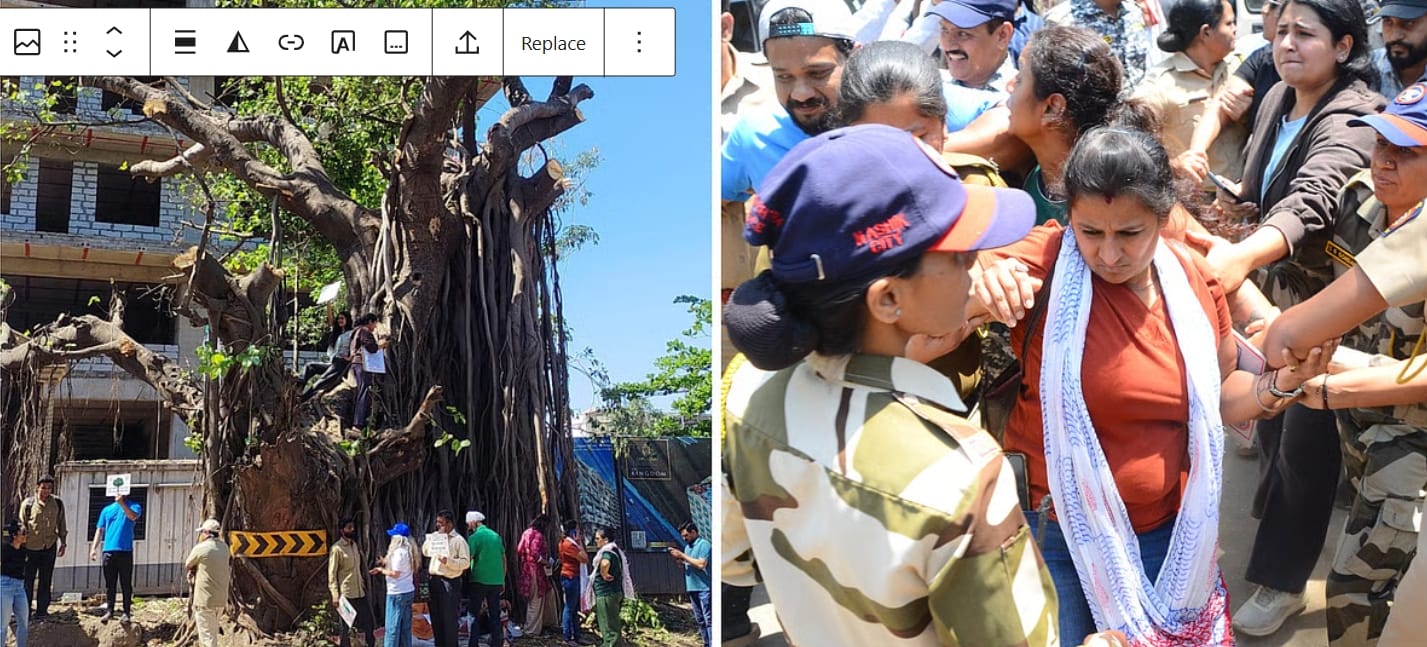
Nashik’s Infrastructure Push Meets Public Resistance
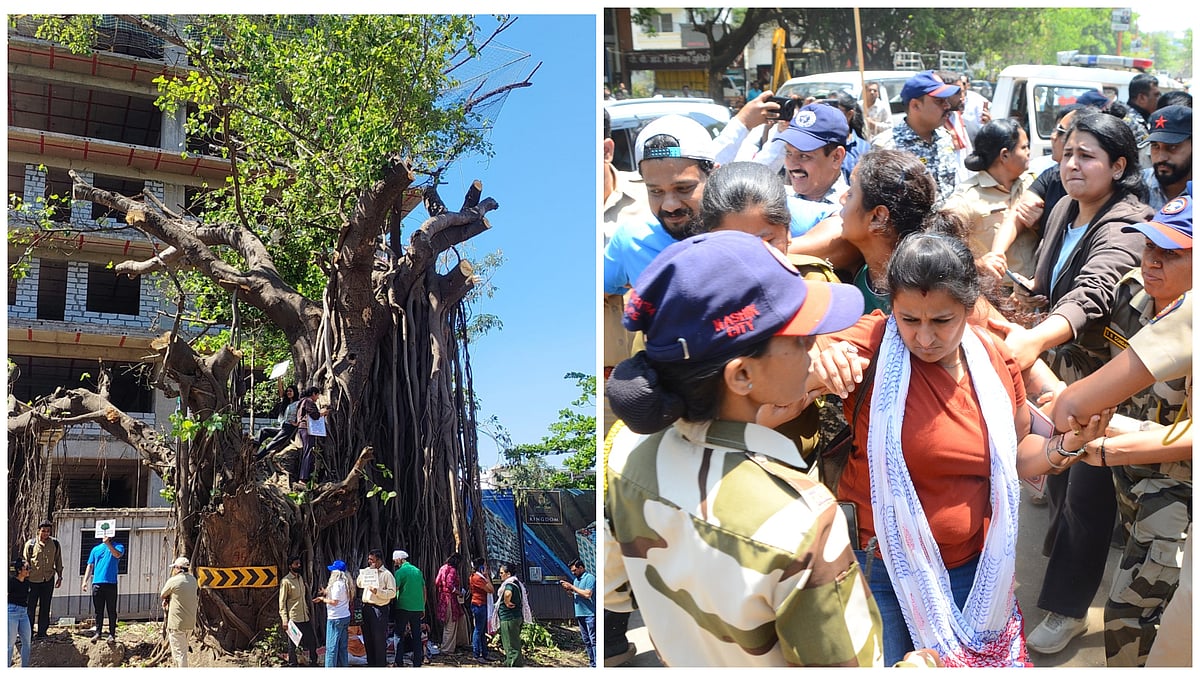
In Nashik, a growing standoff between civic authorities and residents has brought questions of development and environmental responsibility into sharp focus. The trigger is a series of road widening and infrastructure projects that require the removal of hundreds of roadside trees across key parts of the city.
The projects are part of a broader urban upgrade plan tied to anticipated population growth and the logistical demands of the upcoming Kumbh Mela, one of the largest religious gatherings in the world. Officials argue that expanding road capacity is essential to manage traffic flow, ensure public safety, and prevent bottlenecks during peak periods.
But the pace and scale of tree felling have transformed what might have remained a technical civic exercise into a public controversy.
Why Trees Are Being Cut: The Kumbh Factor and Urban Planning

Municipal authorities have linked the tree removal directly to infrastructure upgrades required for hosting future editions of the Kumbh Mela. The event brings millions of pilgrims to Nashik, placing extraordinary pressure on transport networks, emergency services, and public spaces.
To address this, officials have proposed:
- Widening of arterial roads such as Gangapur Road
- Expansion of ring road corridors to divert heavy traffic
- Improvement of connectivity between key धार्मिक and urban nodes
From an administrative perspective, the argument is straightforward: existing road widths are inadequate for the scale of crowd movement expected during major events. Delays in infrastructure preparation, officials warn, could result in severe congestion and safety risks.
However, critics argue that the planning approach prioritizes short-term capacity over long-term sustainability.
The Ecological Cost of Urban Expansion
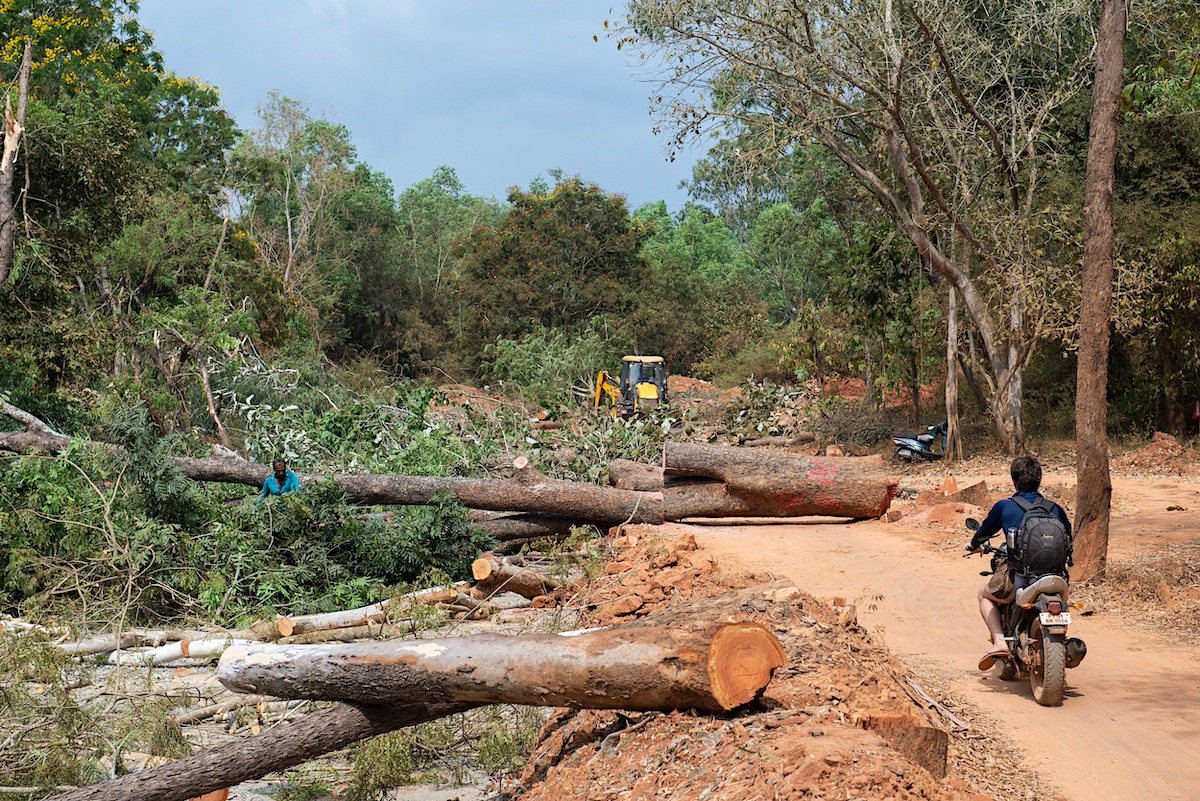
Environmental groups and urban planners point to the loss of mature trees as a critical concern. Many of the trees marked for removal are decades old and form part of Nashik’s diminishing urban green cover.
Their importance extends beyond aesthetics:
- They reduce surface and air temperatures in dense urban zones
- They act as carbon sinks and improve air quality
- They provide shade that directly affects pedestrian comfort and public health
Experts note that while compensatory plantation is often cited as mitigation, newly planted saplings require years, often decades, to deliver comparable ecological benefits. Survival rates of such plantations, especially in urban environments, remain uncertain without sustained maintenance.
Protests, Public Sentiment, and a Growing Trust Deficit
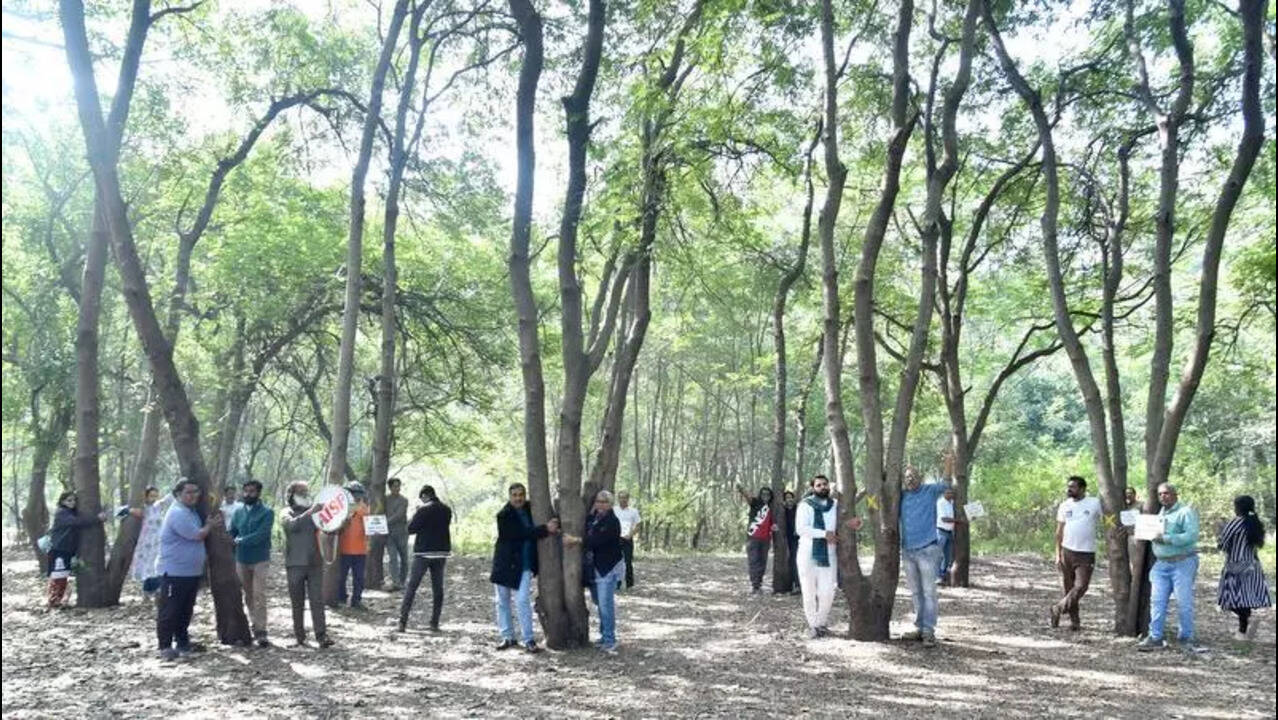
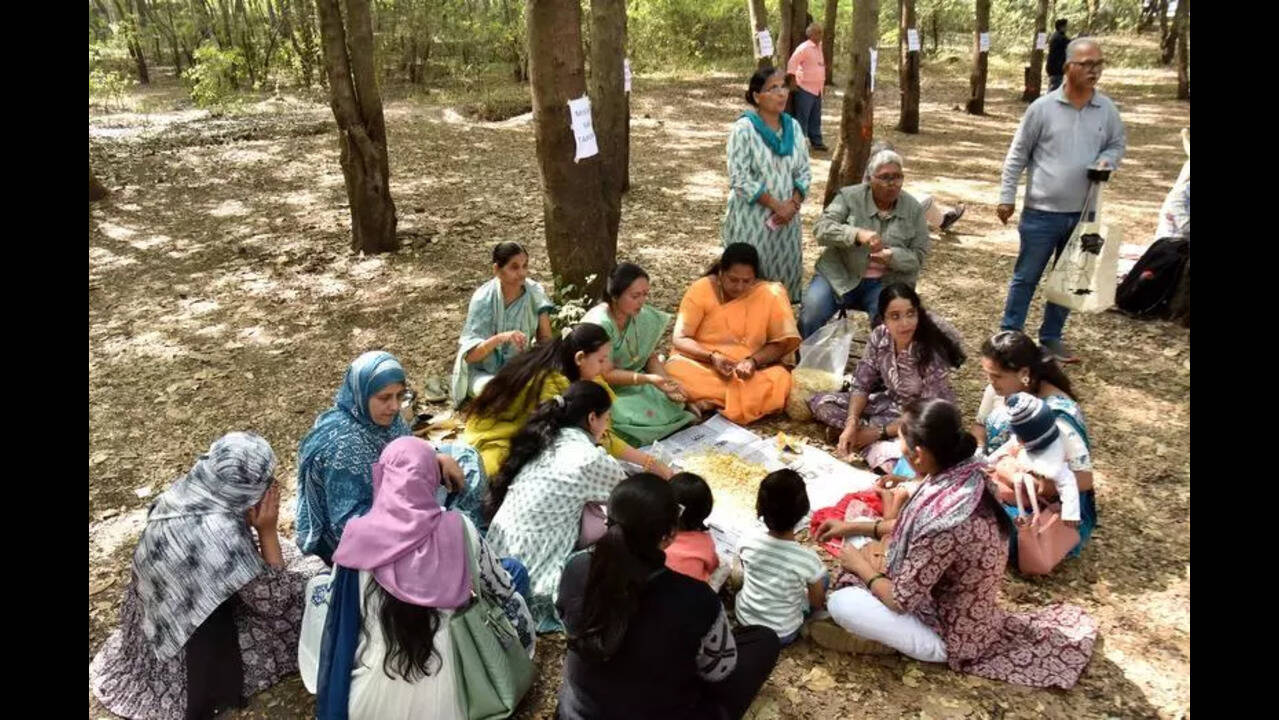
Public reaction has been immediate and visible. Residents, activists, and local organizations have organized protests at multiple sites where tree cutting is underway or planned.
Demonstrations have included:
- Citizens forming human chains around trees
- Environmental groups documenting and sharing on-ground activity
- Online campaigns amplifying the issue beyond local boundaries
The protests reflect not only environmental concern but also a broader skepticism toward official assurances. Many residents question whether compensatory plantation efforts will be effectively implemented, citing past experiences where planted saplings failed to survive or were not maintained.
Reports of police presence at felling sites and the temporary detention of protesters have further intensified tensions, reinforcing perceptions of limited public consultation.
A Familiar Urban Dilemma, Intensified
The situation in Nashik reflects a recurring challenge across rapidly growing Indian cities: balancing infrastructure expansion with environmental preservation.
Urban planners often face competing imperatives:
- Expanding road networks to accommodate rising vehicle numbers
- Preserving green cover that mitigates climate impact and supports livability
In Nashik, this tension is particularly visible because the trees in question are not incidental vegetation but established ecological assets embedded in the city’s landscape.
What Lies Ahead
The outcome of the Nashik dispute remains uncertain. Infrastructure work is continuing, but under increasing public scrutiny and potential legal challenge.
The episode raises broader questions for policymakers:
- Can urban development models integrate environmental safeguards more effectively?
- Are there alternatives to tree felling, such as redesigning road layouts or investing in public transport?
- How should authorities build public trust in large-scale civic projects?
For now, Nashik stands at a critical juncture. The decisions taken here may not only reshape the city’s physical landscape but also influence how similar conflicts are addressed in other parts of the country.