

When a sacred act turns into silent pollution

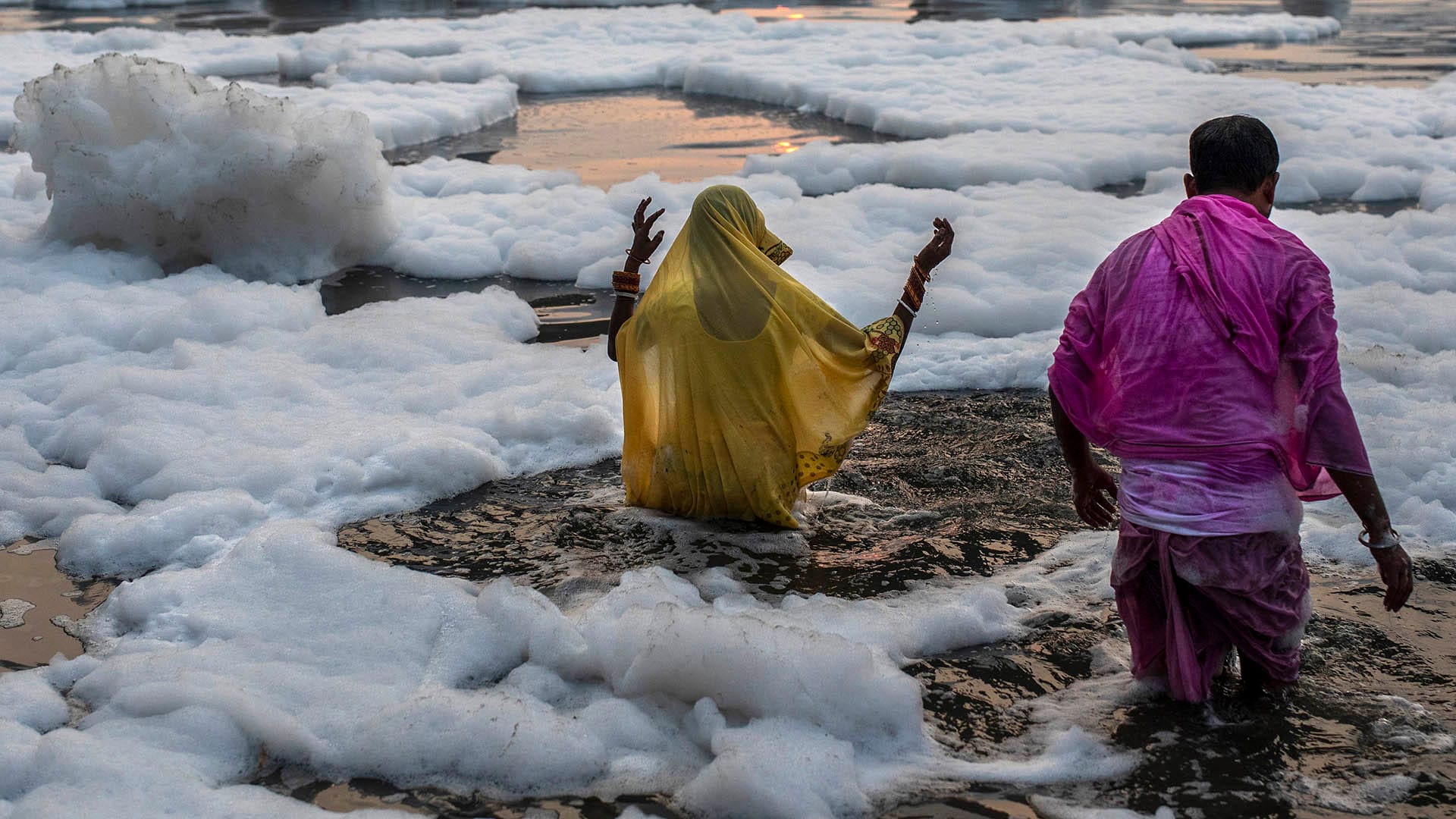
There is a powerful visual that circulates often. A group of devotees stands by a river. Milk flows into the water. Prayers are offered. The act looks pure, symbolic, and deeply rooted in tradition.
12,000 Litres of Milk Dumped into Narmada River Raises Serious Environmental Concerns
But beneath that surface, something else is happening.
Milk entering a river does not remain sacred. It becomes a chemical input into a fragile ecosystem. And ecosystems do not respond to belief. They respond to biology.
Across social media, many claim that fish benefit from such offerings. That they “consume” milk. That nothing is wasted.
This is not true.
Milk in a river is not nourishment. It is pollution.
The science most people never see
Rivers and seas survive on balance. One of the most critical elements in that balance is dissolved oxygen.
Fish, insects, and microorganisms depend on it completely.
When milk enters water, bacteria immediately begin breaking it down. This process consumes oxygen at a rapid rate. Milk has a very high biological oxygen demand, meaning it pulls large amounts of oxygen from the water during decomposition.
The result is simple.
Oxygen drops.
Fish suffocate.
Ecosystems collapse.
This process has been observed repeatedly across scientific studies and real-world incidents. It is not debated. It is understood.
India’s rivers are already under pressure


India’s rivers are already among the most stressed ecosystems in the world.
Industrial waste, sewage discharge, plastic, and ritual offerings all combine to create extreme pollution levels in many rivers. In places like the Yamuna and Ganga, foam, waste, and chemical contamination are already visible.
Adding milk, ghee, oil, and other organic substances into this system does not help. It accelerates damage.
Every additional input increases the biological load. Every ritual adds pressure to an already fragile system.
The river does not distinguish between sacred and non-sacred substances. It only reacts to what enters it.
What actually happens after milk enters water
The chain reaction is brutal and fast.
Milk enters the river.
Bacteria multiply rapidly.
They consume oxygen to break down the milk.
Oxygen levels fall sharply.
Fish and aquatic organisms begin to die.
This is known as a fish kill event. It has been documented globally.
Fish cannot survive in low oxygen conditions. Even short exposure can wipe out entire populations in affected areas.
Real-world proof from the United States

This is not limited to theory or one country.
In the United States, dairy-related waste entering rivers has repeatedly caused mass fish deaths. In one major incident in Iowa, over one hundred thousand fish died after organic waste contaminated a water system.
The cause was clear. Oxygen depletion due to high organic load.
It did not matter that the substance came from a natural source. Once inside the river, it behaved like pollution.
What happened in the United Kingdom

In the United Kingdom, a milk tanker accident released large amounts of milk into a river. The water visibly turned white.
Authorities treated it as an environmental incident.
Why?
Because milk disrupts oxygen levels and damages aquatic ecosystems. Even though it is food for humans, it is harmful in large quantities inside rivers.
This is the key point most people miss.
Something safe in one context can be dangerous in another.
It is not just milk
Milk is only one part of the problem.
Ghee and oil create a surface layer on water, blocking oxygen from entering. Organic waste increases bacterial activity. Plastic and synthetic materials introduce toxins.
Together, these create a deadly combination.
Oxygen decreases from inside.
Oxygen is blocked from outside.
Life struggles from both directions.
Over time, rivers lose their ability to recover.
The myth that refuses to die
The idea that fish benefit from milk continues to spread.
It is emotionally appealing. It sounds logical. But it is scientifically incorrect.
Fish are adapted to their natural ecosystem. Sudden introduction of dairy disrupts that system. It does not feed it.
Feeding fish is not the same as altering the chemical composition of their environment.
One supports life.
The other destroys it.
The damage goes beyond fish
When rivers are polluted, the impact spreads outward.
Water becomes unsafe for human use.
Agriculture suffers.
Biodiversity declines.
Entire ecosystems weaken.
Communities that depend on rivers are affected directly.
This is not just an environmental issue. It is a public health issue.
Faith and responsibility must coexist
This is not about attacking belief. It is about understanding consequences.
Traditions evolve with time. Practices that were once small-scale are now happening at a much larger level.
What once had minimal impact can now cause measurable damage.
Respect for nature requires adaptation.
Protecting rivers is not against tradition. It is necessary for survival.
The role of misinformation
Social media has amplified half-truths and emotional narratives.
People act with good intentions but incomplete knowledge. The result is repeated harm.
Correct information spreads slowly. Viral content spreads instantly.
That imbalance has consequences.
The reality we cannot ignore
Pouring milk into rivers or seas is not harmless.
It reduces oxygen.
It kills aquatic life.
It damages ecosystems.
It worsens already polluted water systems.
These are established scientific facts, supported by real incidents across countries.
A moment to wake up
Rivers are not symbols. They are living systems.
They do not respond to belief.
They respond to what we put into them.
The question is no longer whether this practice is meaningful.
The question is whether it is sustainable.
Because if the damage continues, the cost will not be symbolic.
It will be real.