
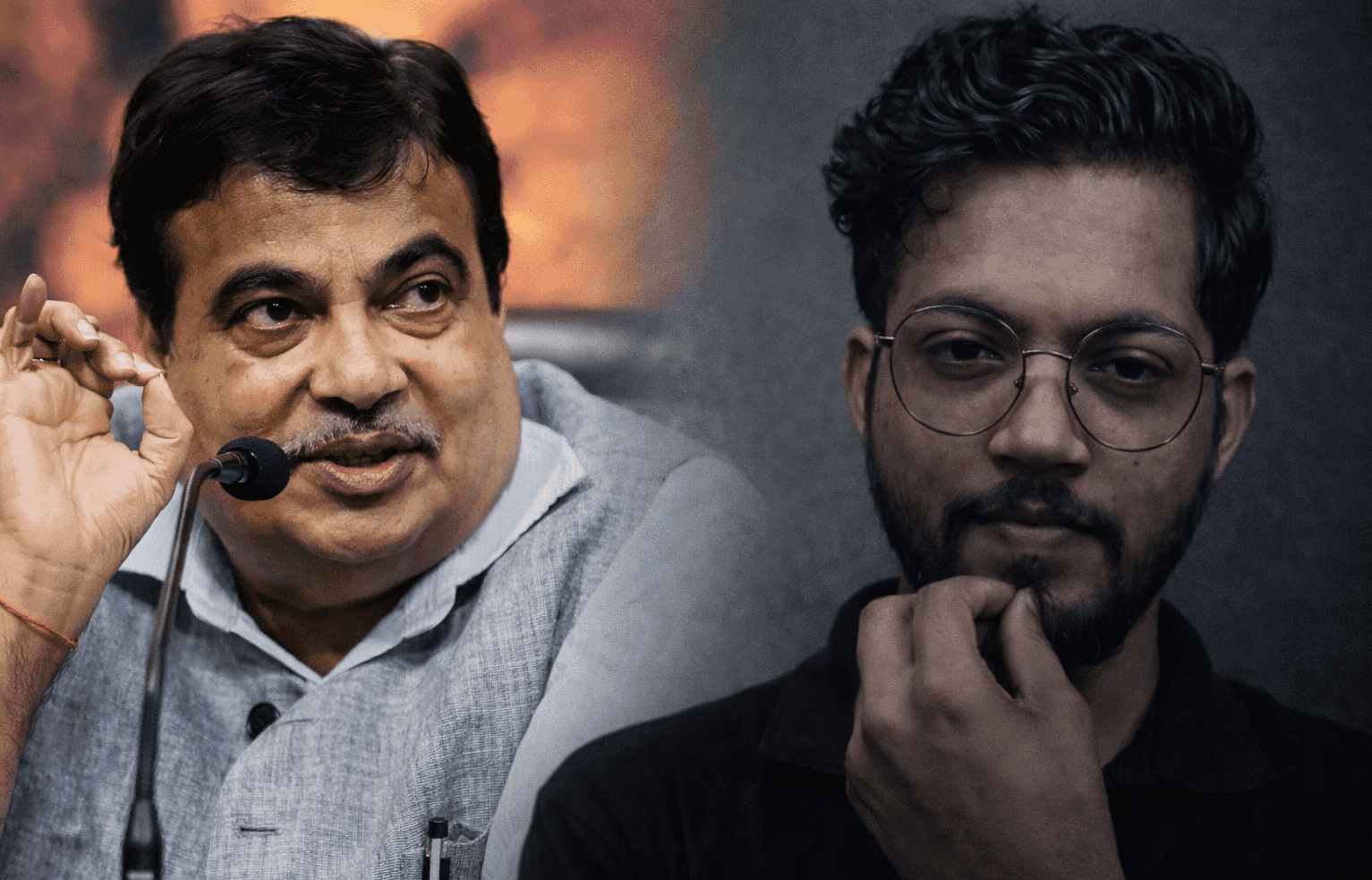
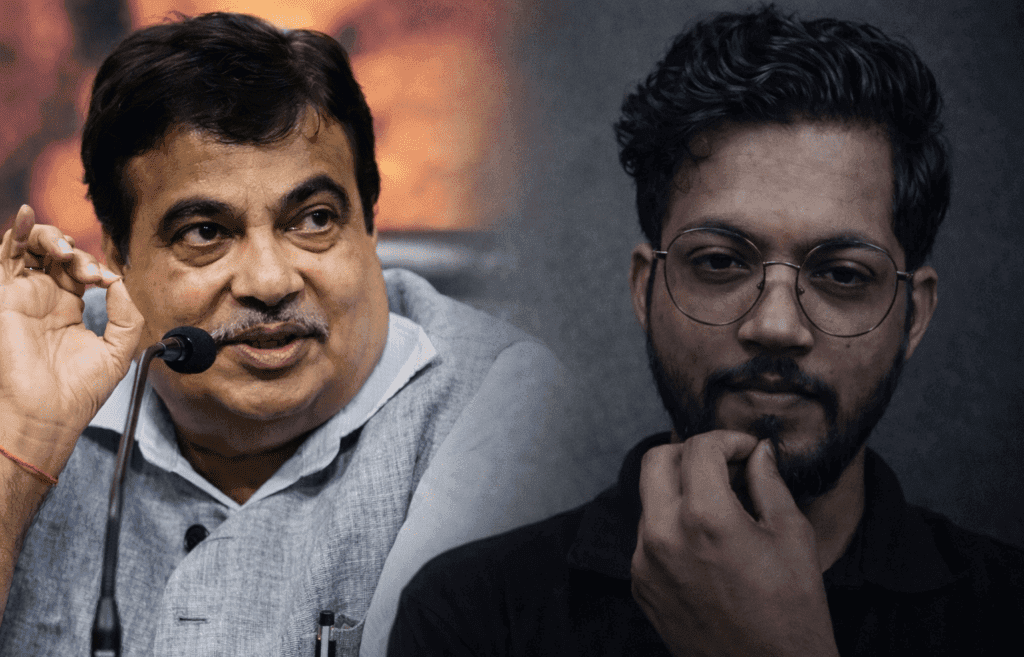
Nitin Gadkari Union Minister and independent content creator Mukesh Mohan has quickly turned into a national conversation about power, law, and the limits of free expression in India. What began as a piece of content based on a report published by The Caravan has now become a case study in how defamation laws interact with the new digital media ecosystem. At the center of this issue is a simple chain of events. A report is published by an established investigative platform. A content creator discusses that report. A powerful political figure responds with a high-value defamation case. But what has made this situation explode online is not just the legal action itself, it is the direction in which that action has been taken.
If It’s True, Why Not Sue the Caravan? Questioning the Gadkari Defamation Case
The Caravan is not an unknown or informal platform. It is a recognized investigative media outlet that publishes long-form journalism and has built a reputation for detailed reporting on political and corporate matters. Such organizations operate with editorial systems, fact-checking processes, and legal review mechanisms. When they publish something, it is usually done with awareness of potential legal consequences. That is why many observers expected that if any claim in the report was false or damaging, the strongest legal challenge would be directed at the source. Instead, the reported ₹50 crore defamation case has been filed against Mukesh Mohan, an independent content creator who interpreted and discussed the report for his audience.
This choice has triggered a wave of criticism. The central argument being made across social media is direct. If the claim is false, then challenge the origin. If the report is wrong, then take the fight to the platform that published it. By choosing to act against a smaller individual instead of a well-equipped media organization, the move appears selective. Whether or not this is legally justified, it creates a perception that the easier target has been chosen. This perception is now driving the entire narrative around the case.
The scale of the defamation claim has also added fuel to the fire. A ₹50 crore case is not a routine legal notice. For an independent creator, it represents an overwhelming financial threat. It brings not just legal pressure but also emotional and psychological strain. Even if the creator believes they are right, the cost of defending such a case can be enough to silence them. This is where the issue goes beyond one individual and becomes systemic. It raises the question of whether the law, while equal in theory, operates differently depending on who is facing it.
This pattern is not new. Similar situations have been seen in other sectors, especially with consumer rights influencers and independent reviewers. In recent years, several content creators who exposed misleading practices by large brands, especially in the food and health space, have faced legal notices and defamation threats. These creators pointed out issues like misleading labels, poor quality products, or false claims in advertising. Instead of addressing the concerns directly, some companies responded with legal action. The strategy in such cases often appears similar. A large entity with strong legal backing files a case against an individual creator, knowing that the cost of fighting back is high. The message it sends is clear. Speaking up can come at a heavy price.

Many observers now see a parallel between those cases and the current controversy. The argument is that powerful institutions, whether political or corporate, sometimes use legal tools not just to defend reputation but also to control narrative. Even if that is not the stated intention, the effect can be the same. Smaller voices become cautious. Others watching from the outside start to self-censor. This is what experts often describe as a chilling effect.
In this context, the criticism directed at Nitin Gadkari is not only about the act of filing a case, but about the choice of target. Critics argue that if the intention is to defend truth, then the most direct path is to challenge the original publisher. By not doing so, and by focusing on an individual creator, the action appears less like a pursuit of accountability and more like an attempt to apply pressure where resistance is weakest. This is the core of the public anger.
At the same time, it is important to acknowledge the legal side. Defamation law does allow action against anyone who publishes or repeats allegedly false statements. From a strict legal perspective, a creator who amplifies a claim can also be held responsible. This means that the case itself is not automatically invalid. But legality and legitimacy are not always seen as the same thing in public discourse. People judge not only what is allowed, but also what is fair.
What has made this situation even more significant is the reaction it has generated. The issue has gone viral across platforms. Content creators, journalists, and ordinary users are discussing it openly. Instead of limiting the spread of the original topic, the legal action has amplified it. This reflects a fundamental reality of the digital age. Information does not move in a straight line anymore. It spreads in networks. Trying to control it at one point often leads to expansion at multiple other points.
Is This Justice or Pressure? The Bigger Question Behind the ₹50 Crore Case
This case also highlights a deeper transformation in Indian media. The traditional model, where a few large organizations controlled most narratives, is being replaced by a decentralized system. Independent creators now play a major role in shaping public opinion. They are faster, more direct, and often more relatable to audiences. But they are also more vulnerable. They do not have the institutional protection that traditional media enjoys. This makes them both powerful and exposed at the same time.
The criticism of Nitin Gadkari, therefore, is rooted in this larger context. It is not only about one legal case. It is about how power interacts with this new media environment. When a powerful figure chooses to take action against a smaller voice instead of a larger institution, it sends a message. Whether intended or not, that message is being interpreted as an attempt to silence or discourage independent expression.
In the end, this controversy raises a question that goes beyond individuals. What does freedom of speech look like in a system where legal action can be used at such scale? Can independent creators truly operate without fear if the cost of a single case can end their work? And if truth is the central issue, should the challenge not be directed at its source?
The answers to these questions will not come from one case alone. But this moment has clearly exposed the tension between authority and expression in modern India. The debate is no longer limited to courtrooms. It is happening in public, in real time, across millions of screens.
And once that kind of debate begins, it does not stop easily.