

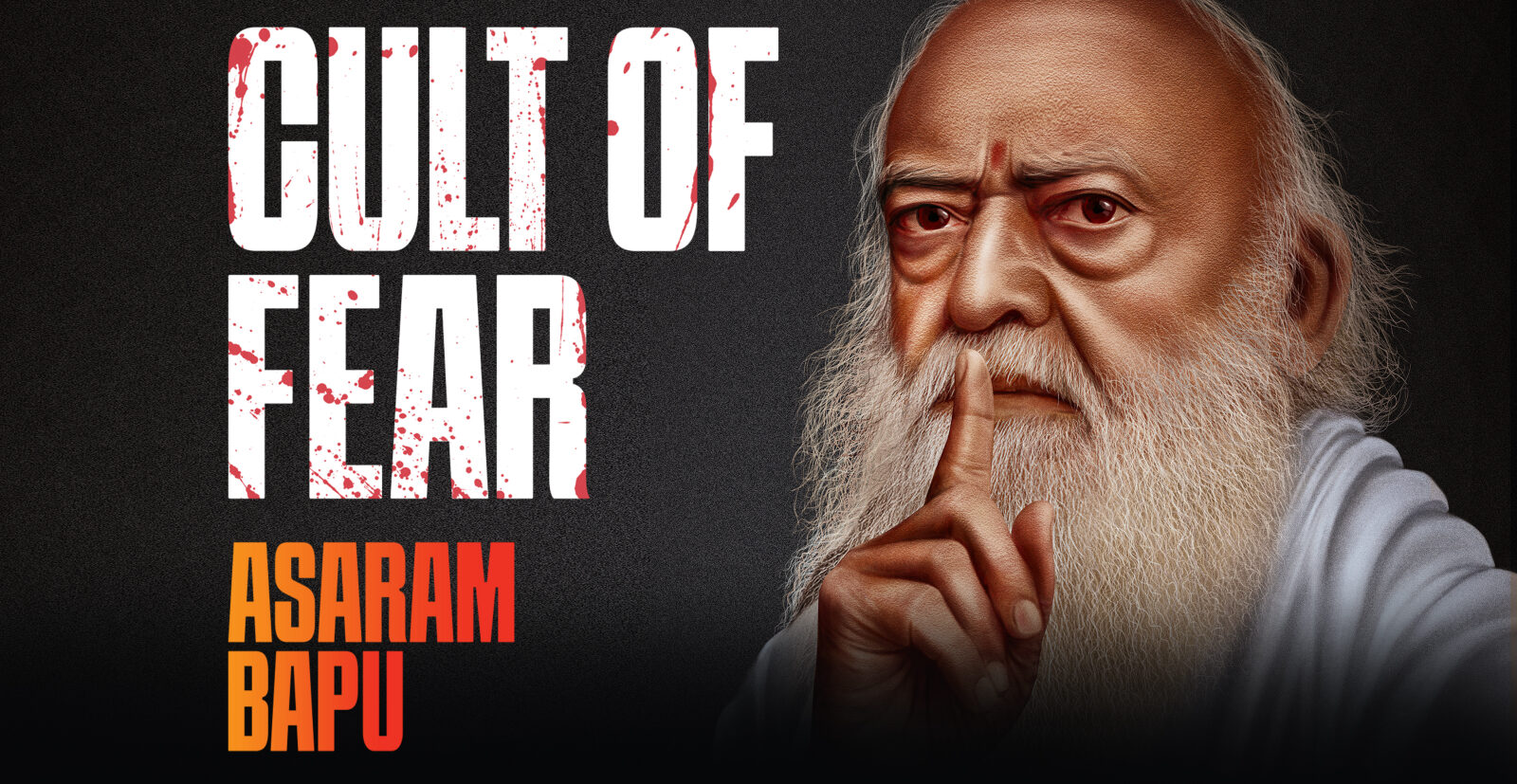
This is not about religion. This is not about faith. This is about power, hypocrisy, and the collapse of moral accountability in a system that claims justice for all.
In recent years, India has seen a disturbing pattern where convicted criminals, especially those with religious or political influence, are treated not as offenders but as respected figures. One of the most controversial examples is Asaram Bapu, a self-styled godman who was convicted in 2018 for rape of a minor. The court gave its verdict. The law spoke clearly. Yet the reality outside the courtroom tells a different story.
Despite the conviction, public appearances, VIP security, and symbolic respect continue to follow him. This creates a dangerous message. It tells society that power can override justice. It tells victims that their suffering is secondary. And it tells citizens that laws are not equal for everyone.

At the same time, political narratives around building a “New India” and ideas like a “Hindu Rashtra” are becoming louder. These ideas are presented as cultural revival or national pride. But when such narratives coexist with visible double standards in justice, they raise serious questions. What kind of nation is being built if convicted individuals receive honor instead of accountability?
This contradiction is not small. On one side, there are grand projects like Ram Mandir and Kashi Vishwanath Corridor, presented as symbols of civilizational pride. On the other side, there is visible tolerance or even support for individuals who have been legally proven guilty of serious crimes. This contrast creates moral confusion. It damages the credibility of both institutions and ideology.
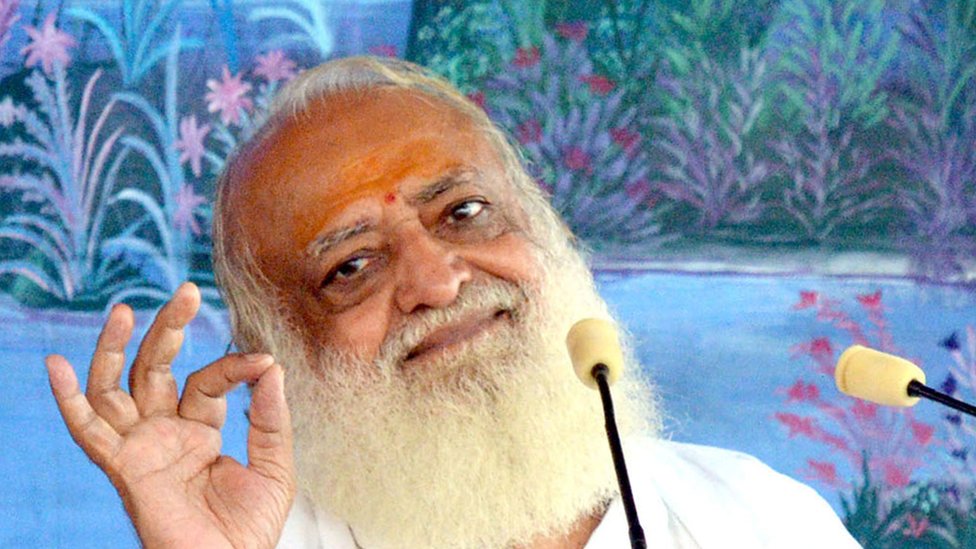
The real issue is not religion itself. No religion supports injustice. The issue is the use of religion as a shield for power. When faith becomes a tool for political or social immunity, it stops being faith and becomes a system of control.
Victims in such cases often struggle for years to get justice. They face social pressure, threats, and stigma. When they finally win in court, and still see the accused treated like a VIP, it sends a cruel signal. Justice becomes symbolic instead of real.
A strong nation is not defined by monuments or slogans. It is defined by how it treats its weakest citizens. It is defined by whether the law applies equally to the powerful and the powerless. If that equality breaks, everything else becomes hollow.
India stands at a crossroads. It can choose to strengthen its institutions, respect its Constitution, and ensure equal justice. Or it can continue down a path where influence decides outcomes and accountability becomes optional.
This is not about being anti-national. Asking questions is not anti-national. Demanding accountability is not anti-national. In fact, silence in the face of injustice is what weakens a nation.
The real “New India” should be one where no criminal, no matter how powerful, receives special treatment. Where justice is not selective. Where faith is not misused. And where the dignity of victims is respected above all.
Until that happens, the idea of progress will remain incomplete.

7 Comments