
Analysis | Social History | Identity Politics
Walk through almost any town in northern or western India and one question often reveals more than people realize.


“What is your surname?”
In many parts of India, the answer is rarely just a family name.
It often reveals caste.
Sometimes occupation.
Sometimes community.
Sometimes political identity.
Sometimes assumptions about social status before two people have even finished introducing themselves.
A single surname can quietly communicate generations of inherited hierarchy.
Sharma.
Yadav.
Jaat.
Rajput.
Thakur.
Patel.
Nair.
Reddy.
Gounder.
Thevar.
Hundreds of surnames across India continue functioning as visible social markers.
Even today, marriage proposals, village politics, housing decisions, electoral calculations, and local influence often begin with a surname before they begin with an individual.
But travel to large parts of Punjab or Tamil Nadu and something feels noticeably different.
Many Sikhs simply introduce themselves as Singh or Kaur.
Many Tamilians introduce themselves using personal names or initials without publicly displaying caste surnames.
The difference raises an important question.
Why did two regions separated by nearly three thousand kilometers both develop influential movements that challenged hereditary caste surnames?
The answer begins centuries before Instagram, long before Indian democracy, and even before modern nationalism.
A Surname In India Is Rarely Just A Name
Across much of the world, surnames usually identify families.
In India, surnames have often carried a second function.
They identify social location.
Historically, caste was not simply an occupation.
It became a hereditary social system in which identity passed from one generation to another.
Over centuries, many surnames became linked with particular castes, clans, occupations, or regional communities.
Whether someone was associated with priesthood, agriculture, land ownership, administration, artisan work, or other traditional occupations could often be inferred through their surname.
That does not mean every person sharing a surname belongs to the same caste everywhere in India.
Nor are surnames the only indicator of caste.
India’s social history is extraordinarily diverse.
But in everyday life, surnames frequently became powerful identity markers.
The moment a name was spoken, assumptions often followed.
Marriage compatibility.
Community networks.
Political affiliation.
Local influence.
Sometimes even prejudice.
Names became social shortcuts.

How Identity Became Public Performance
Today’s India has given caste a new stage.
The internet.
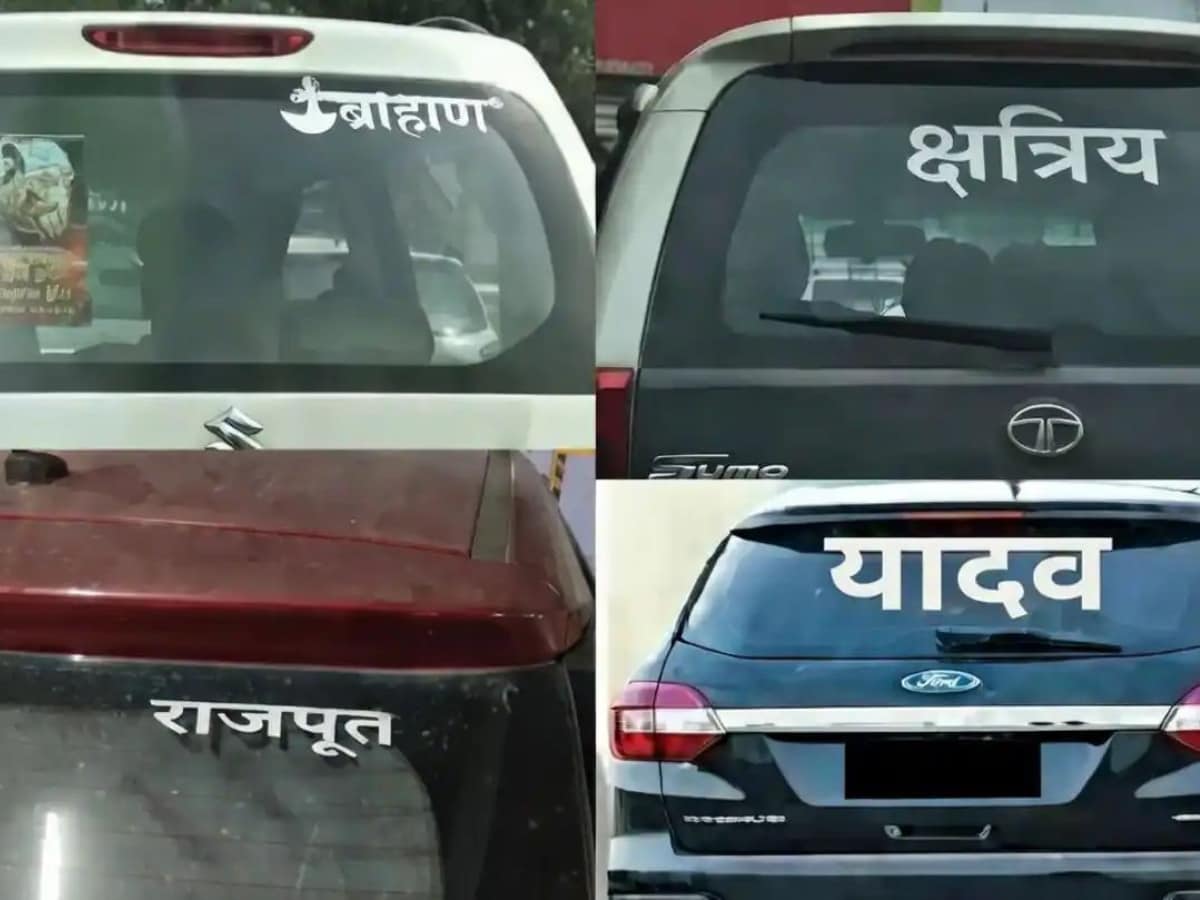
Across Instagram, Facebook, YouTube Shorts, WhatsApp, and short-video platforms, surnames increasingly appear not merely as identifiers but as brands.
“Rajputana Pride.”
“Jaat Blood.”
“Brahmin Power.”
“Maratha Warrior.”
“Thakur Lifestyle.”
Community flags.
SUV stickers.
Aggressive background music.
Slow-motion edits.
Luxury vehicles.
Political symbolism.
What earlier generations expressed quietly inside villages is increasingly performed publicly before millions of viewers.
Identity has become content.
Algorithms reward emotion.
Emotion creates engagement.
Engagement creates visibility.
Visibility creates imitation.
As more creators display caste identity, others begin doing the same.
The cycle reinforces itself.
Sociologists often describe this process as identity performance.
People increasingly express belonging through visible symbols because digital platforms reward visibility.
In such an environment, caste does not disappear under modernization.
It adapts.
Long Before Social Media, Some Reformers Asked A Different Question
More than three hundred years before Instagram existed…
One religious leader in Punjab challenged inherited identity in a remarkable way.
His name was Guru Gobind Singh.
In 1699, during the creation of the Khalsa, Guru Gobind Singh introduced a revolutionary naming practice.
Men were encouraged to adopt the name Singh.
Women were encouraged to adopt the name Kaur.
The decision was not merely symbolic.
Within the Khalsa, these names helped reduce distinctions based on hereditary family names and caste identities, emphasizing equality and a shared Sikh identity.
Instead of publicly carrying inherited caste surnames, members of the Khalsa would share common names that emphasized collective identity.
It was a profound social statement for its time.
The message was simple.
A person’s dignity should not depend on inherited social rank.
Of course, history is complicated.
Caste distinctions did not disappear from Sikh society.
Scholars have documented the continued existence of caste identities among Sikhs, especially in marriage patterns and social organization.
But Guru Gobind Singh’s reform represented an important challenge to inherited hierarchy within the Sikh community.
The idea itself was radical.
Identity could be reimagined.
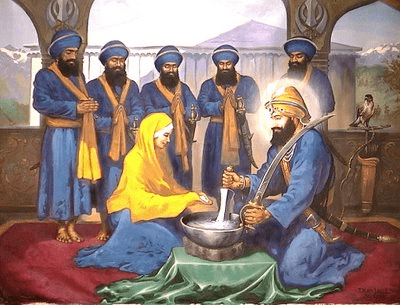
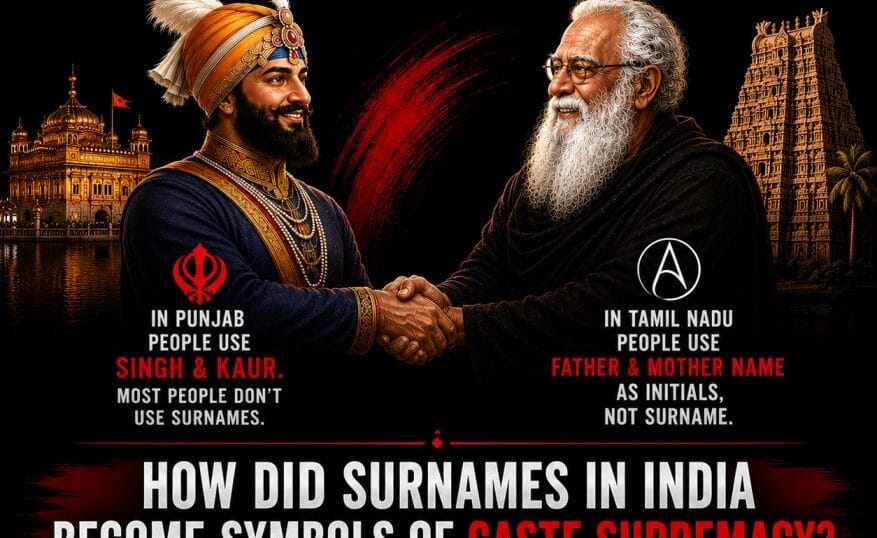
Painting of Guru Gobind Singh introducing the Khalsa, alongside the words “Singh” and “Kaur”.
Nearly Two Centuries Later, Tamil Nadu Asked The Same Question In A Different Way
More than two hundred years later…
Another reformer would ask a similar question from an entirely different ideological position.
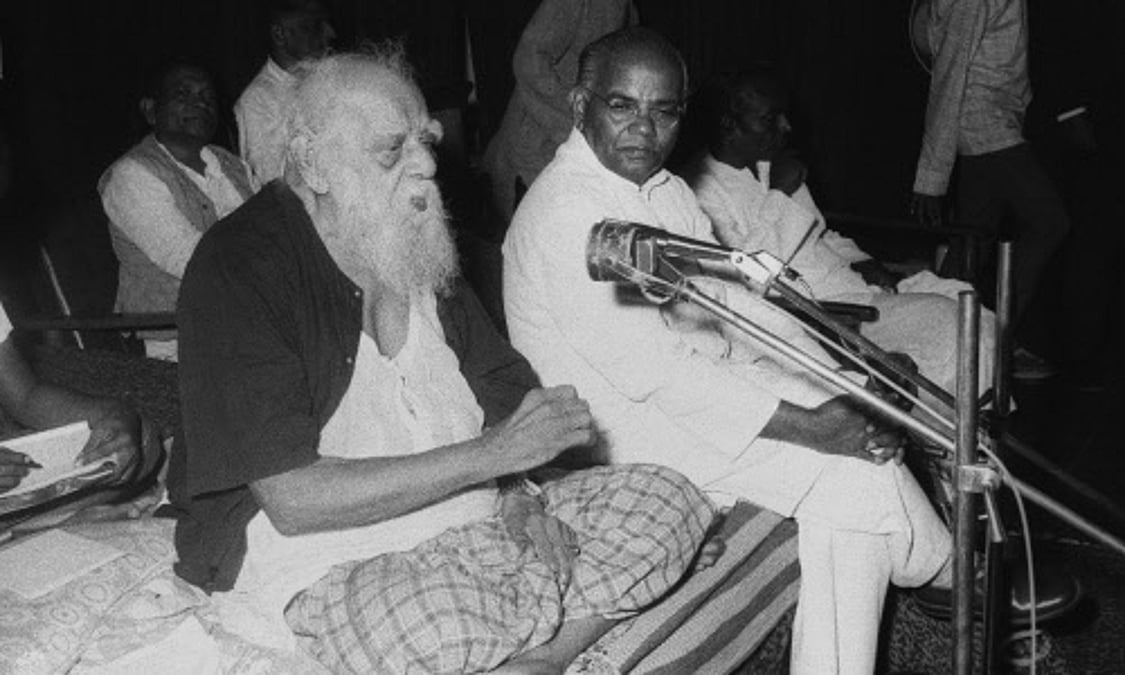
His name was Periyar E. V. Ramasamy.
Unlike Guru Gobind Singh, Periyar approached caste through social reform, rationalism, and the Self-Respect Movement.
He argued that caste survived not only through discrimination and economics but also through everyday cultural habits.
Names.
Marriage.
Religion.
Rituals.
Customs.
Language.
Symbols.
And especially…
Surnames.
Periyar believed that if a person’s caste became visible the moment they introduced themselves, equality had already been compromised before any conversation even began.
He encouraged people to abandon caste titles and hereditary surnames, instead using initials or personal names.
This was not simply a change in naming.
It was a challenge to an entire social psychology that attached dignity to inherited hierarchy.
For Periyar, dismantling caste required changing everyday behavior, not merely changing laws.
And perhaps no everyday behavior was more visible than introducing oneself.
The Self-Respect Movement Was Never Just About A Name
When Periyar launched the Self-Respect Movement in the 1920s, his objective was far bigger than changing how people introduced themselves.
He believed caste survived because it was continuously normalized in everyday life.
Children inherited caste before they inherited independent thought.
Marriage reinforced caste.
Religion reinforced caste.
Family traditions reinforced caste.
Schools often ignored it.
Politics benefited from it.
And surnames silently carried it from one generation to another.
For Periyar, removing caste surnames was not about pretending caste no longer existed.
It was about refusing to advertise inherited hierarchy as a public identity.
A surname, in his view, functioned like a permanent social label.
The moment someone introduced themselves, society had already started placing that person inside an invisible hierarchy.
Who was considered “higher.”
Who was considered “lower.”
Who could marry whom.
Who belonged to which social network.
The hierarchy began before the conversation itself.
The Self-Respect Movement attempted to interrupt that process.
Many Tamilians gradually stopped using caste surnames publicly and instead adopted initials, personal names, or their father’s name.
It did not eliminate caste.
But it reduced one of caste’s most visible public symbols.
Punjab And Tamil Nadu Took Different Roads To A Similar Destination
Punjab and Tamil Nadu are often compared today because both regions reduced the public importance of caste surnames.
But the historical journeys were very different.
Guru Gobind Singh’s reforms emerged from Sikh religious history.
Periyar’s reforms emerged from rationalist and social reform politics.
One emphasized a shared Khalsa identity.
The other emphasized dismantling hereditary hierarchy through social change.
The motivations were different.
The historical contexts were different.
Yet both movements questioned one powerful idea.
Should a person’s inherited identity define who they are?
That question remains relevant even today.
Kerala Chose A Different Path
Kerala’s transformation followed yet another route.
Social reformers such as Sree Narayana Guru, Ayyankali, and Chattampi Swamikal challenged caste discrimination through education, social reform, and campaigns against untouchability.
Later, literacy expansion, land reforms, and political movements further weakened the public importance of hereditary identity in many parts of the state.
Unlike Tamil Nadu, Kerala did not witness one centralized campaign against caste surnames.
Instead, change happened gradually through education, social reform, and social mobility.
Many Malayalis today use initials, house names, or shortened naming systems rather than strongly emphasizing caste surnames in public life.
Again, not perfectly.
Caste discrimination still exists.
But public display of caste identity is generally less visible than in many other parts of India.

Digital India Is Bringing Caste Back Into Public Display
For decades many reformers tried to reduce the public importance of caste.
The internet may now be reversing part of that process.
Open Instagram.
Search YouTube Shorts.
Browse Facebook.
Watch attitude reels.
Across social media, caste identity has become content.
Instagram bios proudly display caste names.
SUVs carry caste stickers.
Political pages celebrate caste identity.
Short-form videos combine cinematic music, luxury vehicles, weapons, and slogans celebrating hereditary identity.
Algorithms reward engagement.
Engagement rewards identity.
Identity becomes branding.
Instead of disappearing under modernization, caste has adapted to digital culture.
Many young people who may never have experienced traditional village caste structures still participate in online caste identity because social media rewards visibility and belonging.
For some, it is community pride.
For others, it becomes competitive identity politics.
Either way, caste becomes increasingly visible again.
Why Visibility Matters
Some people argue that a surname is only a surname.
Others argue that removing surnames changes nothing because caste discrimination still exists.
Both statements contain some truth.
Changing names alone cannot eliminate caste.
Discrimination can continue without surnames.
But sociologists also point out something important.
Symbols influence society.
Flags matter.
Uniforms matter.
Religious symbols matter.
Political symbols matter.
Names matter too.
When a society repeatedly celebrates inherited identity as a source of prestige, future generations may begin associating inherited status with personal achievement.
Over time, inherited identity becomes normalized.
That is precisely why many reformers challenged public symbols alongside legal discrimination.
Changing symbols does not solve every problem.
But symbols influence how societies imagine themselves.
Bihar’s Sticker Crackdown Reopened An Old Debate
The debate became national once again when authorities in Bihar acted against caste-related vehicle stickers and slogans, warning of penalties for violations.
Supporters argued that public roads should not become spaces for displaying caste dominance or intimidation.
Critics responded that removing stickers cannot eliminate centuries of structural inequality.
Both arguments highlight an important distinction.
Removing symbols is not the same as removing discrimination.
But allowing symbols to become public performances can reinforce inherited divisions.
The debate is therefore much larger than stickers.
It is about how India chooses to imagine public identity.
What Does Modern India Want To Be?
India describes itself as the world’s largest democracy.
Its Constitution guarantees equality before the law.
Its economy is increasingly digital.
Its cities are increasingly urban.
Its young population is increasingly connected.
Yet questions about inherited identity continue to shape everyday life.
Marriage.
Politics.
Housing.
Community organizations.
Election campaigns.
And increasingly…
Social media.
Many people proudly display caste surnames because they see them as family heritage.
Others argue that public celebration of caste identity strengthens old hierarchies.
This disagreement reflects one of the deepest unresolved debates in modern India.
Can caste become a private cultural identity without remaining a public hierarchy?
India has not reached a consensus.
The Unfinished Experiment
Neither Punjab nor Tamil Nadu created a caste-free society.
That would be historically inaccurate.
Punjab continues to experience caste inequalities.
Tamil Nadu continues to experience caste violence and discrimination.
Kerala also faces caste-related challenges.
No state solved the problem completely.
But each demonstrated that public culture can change.
Names can change.
Symbols can change.
Social attitudes can evolve.
History shows that identities are not fixed forever.
They are shaped, challenged, and reimagined by society.
Nearly three centuries ago, Guru Gobind Singh questioned inherited distinctions within the Khalsa.
A little over a century ago, Periyar questioned why inherited caste identity should accompany a person throughout life.
Today, another generation faces a different question.
Should social media revive the public celebration of hereditary identity?
Or should modern India continue the unfinished work of reducing inherited hierarchy in public life?
The answer will not be decided by history books alone.
It will be decided by what millions of Indians choose to celebrate, display, and normalize every single day.