
Analysis | Law | Public Accountability
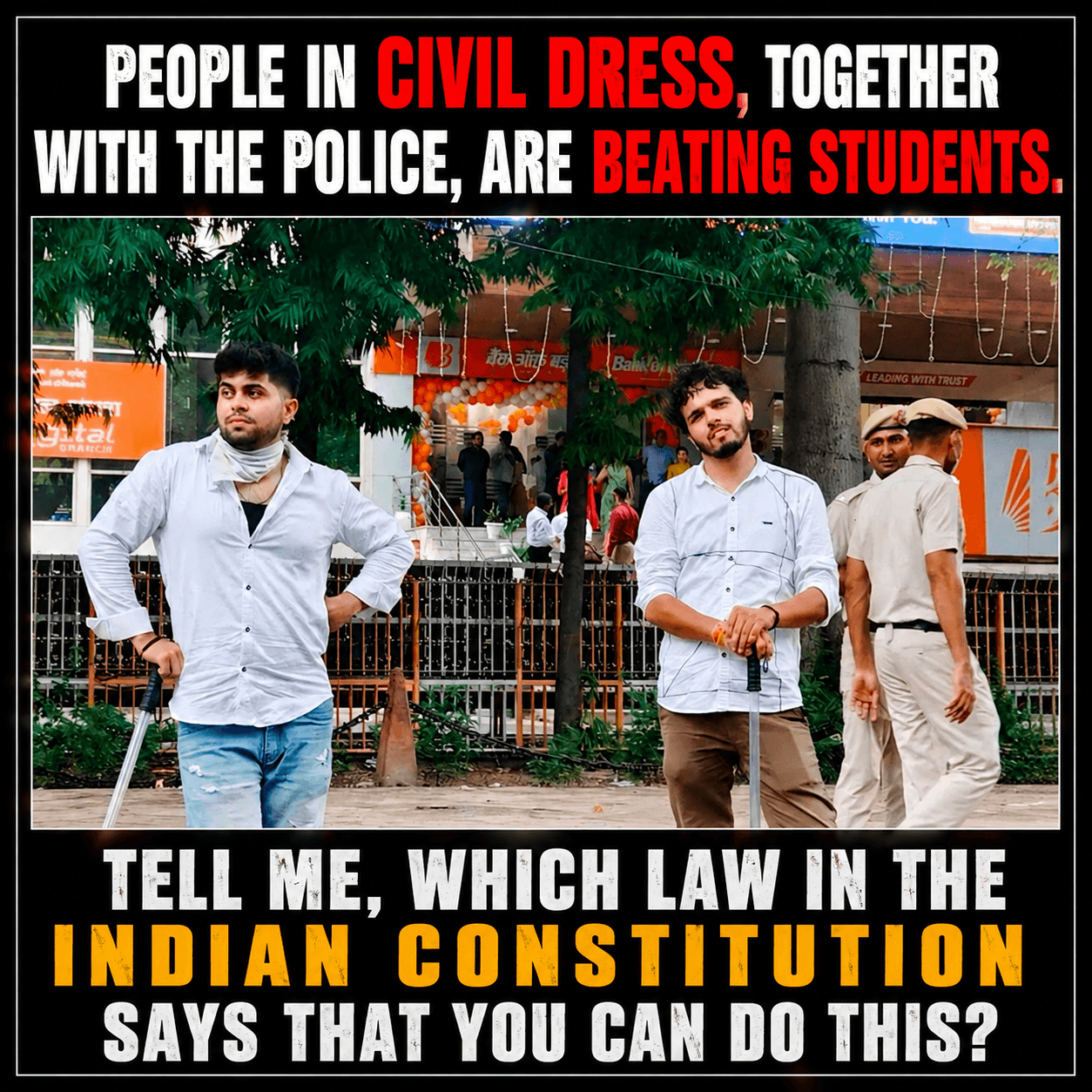
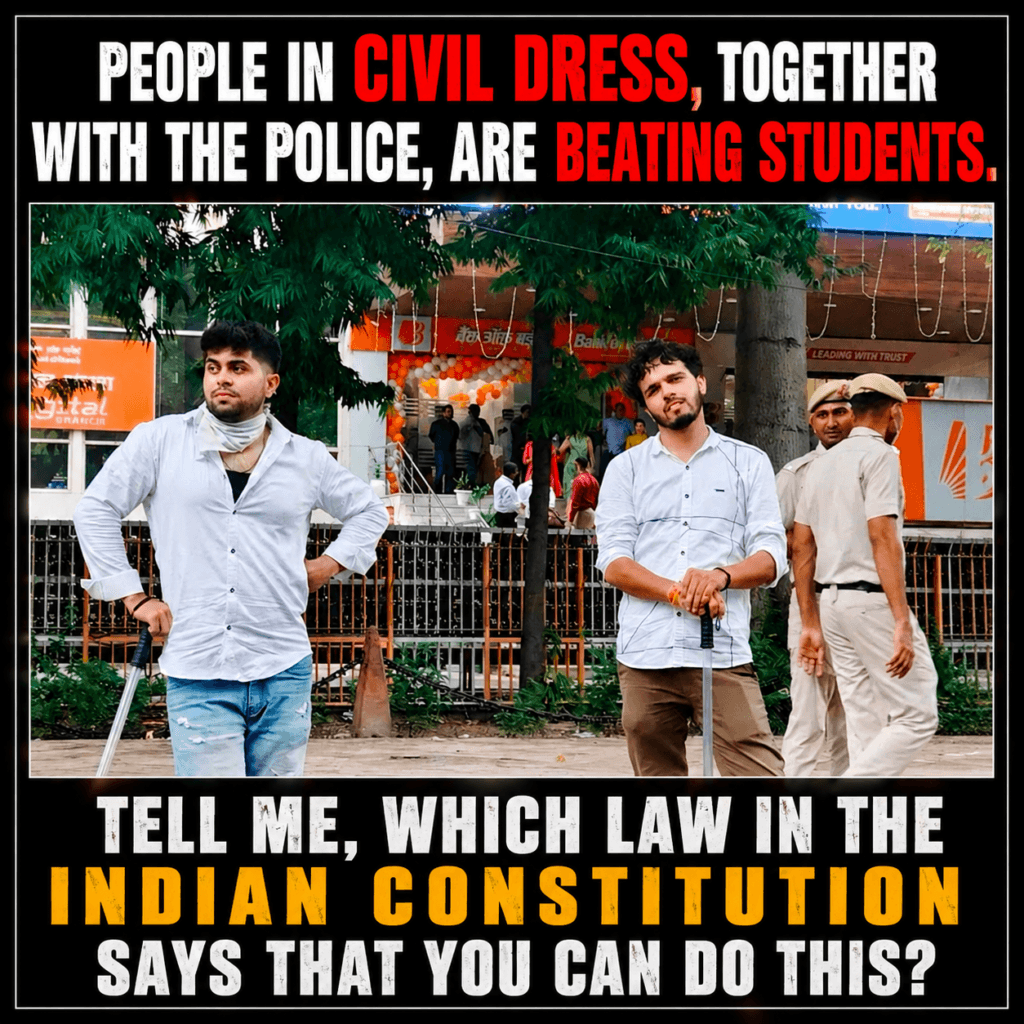
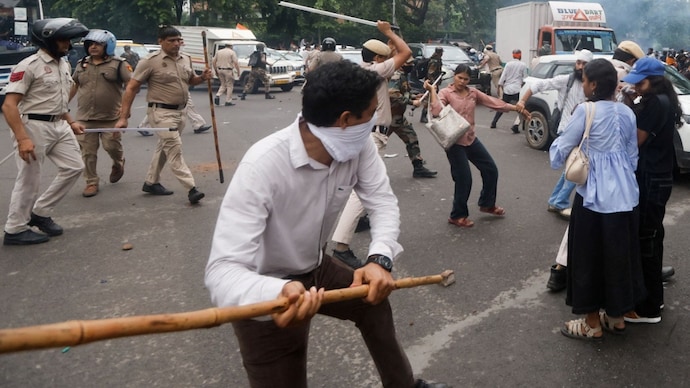
Videos from the July 20 protest near Parliament have triggered one of the biggest debates on policing in recent years. Several clips widely shared on social media appeared to show some personnel involved in crowd-control operations dressed in civilian clothes, while others wearing uniforms allegedly did not display visible nameplates or identification. The videos quickly became the centre of a national conversation, with many questioning whether police officers can legally conceal their identity while exercising state authority. Others defended the practice, arguing that officers often face genuine security threats and that revealing their identities may expose them and their families to harassment or retaliation. The controversy has now moved beyond social media, with petitions reaching the Delhi High Court and renewed discussion about the balance between police accountability and operational security.
The debate is not simply about uniforms or nameplates. It concerns a fundamental democratic principle. When a police officer exercises powers such as stopping people, dispersing crowds, making arrests, or using force, should citizens always be able to identify that officer? Or can there be situations where concealing an officer’s identity is legally justified? There is no single sentence in Indian law that answers every possible situation, which is precisely why the issue has generated such intense legal and public discussion.
Why the Controversy Began
The controversy emerged after the July 20 protest organised near Parliament. Videos circulating online appeared to show some personnel carrying batons while dressed in civilian clothes, while other officers were alleged to have removed or covered their nameplates. Several lawyers, activists, and opposition leaders argued that if officers cannot be identified, it becomes extremely difficult for citizens to seek accountability if allegations of excessive force arise. Petitions filed before the Delhi High Court have questioned the manner in which the protest was handled, alleging excessive use of force and raising concerns about police conduct. The High Court has sought responses from the Centre and Delhi Police, meaning the matter is now under judicial consideration.
The issue has resonated because videos alone rarely provide the full context of a policing operation. Some clips showed officers in uniform, others appeared to show individuals in civilian clothes, and questions were raised about whether all of them were police personnel, whether they were deployed in specialised roles, and whether existing operational protocols were followed. These questions remain part of the ongoing public and legal debate.
Why Some Police Officers Conceal Their Identity
Former police officers have defended the practice in certain circumstances, arguing that policing in India often involves serious security risks. According to retired officers quoted in recent discussions, personnel involved in sensitive operations can become targets of intimidation, online abuse, prolonged litigation, or even threats from extremist groups.
They point out that practices involving concealed identities did not originate during ordinary protests. Instead, they evolved over decades in conflict-affected regions such as Jammu and Kashmir during the insurgency, Punjab during the years of militancy, and parts of Chhattisgarh affected by Maoist violence. In such environments, officers argued that displaying their names publicly could expose them and their families to retaliation.
Supporters of this approach therefore argue that operational security cannot be ignored. They contend that police officers are public servants, but they are also individuals who face genuine risks while performing dangerous duties.
The Other Side of the Argument
Civil liberties advocates and constitutional lawyers see the issue differently.
They argue that the police derive their authority from the Constitution and the law. Whenever an officer exercises coercive powers, citizens should know who that officer is. If identification is absent, victims of alleged misconduct may find it almost impossible to file meaningful complaints or pursue legal remedies.
Critics also argue that anonymity may weaken public trust. In democratic societies, police legitimacy depends not only on enforcing the law but also on demonstrating accountability. When officers cannot be identified, questions naturally arise about transparency, responsibility, and oversight.
Several lawyers have argued that if an unidentified individual gives directions, disperses crowds, or uses force while claiming to be a police officer, citizens may have no practical way of verifying that authority afterwards.
What Does Indian Law Actually Say?
One reason this controversy has become so significant is that Indian law does not provide an explicit answer covering every crowd-control situation.
The Bharatiya Nagarik Suraksha Sanhita (BNSS), which replaced the Code of Criminal Procedure, contains provisions relating to maintenance of public order, unlawful assemblies, and police powers. However, it does not specifically prescribe that every officer engaged in crowd-control duties must display a visible nameplate at all times.
This legal silence has resulted in differing interpretations.
Police officials argue that the absence of an explicit prohibition allows operational flexibility in exceptional situations.
Many lawyers, however, argue that constitutional principles of accountability continue to apply even when statutes remain silent.
The Importance of the D.K. Basu Judgment
The legal debate frequently refers to the Supreme Court’s landmark judgment in D.K. Basu v. State of West Bengal (1997).
The case arose from concerns over custodial violence and illegal detention. To safeguard fundamental rights, the Supreme Court laid down several mandatory guidelines governing arrests and detention.
Among those directions was a requirement that police personnel carrying out arrests should bear accurate, visible, and clear identification along with name tags.
The objective was straightforward. If citizens know which officers exercised police powers, accountability becomes possible.
However, there is an important legal distinction.
The D.K. Basu judgment specifically addressed arrests and custodial safeguards. It did not directly establish rules governing riot-control operations, crowd management, or large-scale public demonstrations.
This distinction lies at the centre of the present debate.
Some legal experts argue that the principles established in D.K. Basu should naturally extend to all situations where police exercise coercive powers.
Others argue that applying arrest guidelines directly to crowd-control operations requires further judicial clarification.
Andhra Pradesh High Court’s Observations
The issue has also been examined by the Andhra Pradesh High Court.
While hearing a separate matter involving police action, the High Court questioned how members of the public could identify police personnel if they were operating in plain clothes while performing official duties.
Although the observations arose in a different factual context, they reinforced an important constitutional concern.
If citizens cannot distinguish police officers from ordinary civilians, accountability becomes significantly more difficult.
Those observations have since become part of the broader national discussion surrounding police identification.
Accountability and Officer Safety Are Both Public Interests
One of the reasons this issue has attracted so much attention is that both sides raise legitimate concerns.
Police officers routinely perform dangerous duties.
They often confront violent crowds, organised criminal networks, extremist organisations, and politically sensitive situations.
Protecting officers from unnecessary personal risk is an important public interest.
At the same time, citizens possess constitutional rights against arbitrary state action.
If force is used unlawfully, individuals must have effective mechanisms for seeking accountability.
These two objectives are not mutually exclusive.
The challenge lies in designing policies that adequately protect both officers and the public.
Some countries require visible badge numbers instead of full names.
Others use unique identification codes that allow complaints without revealing personal details publicly.
Such systems attempt to balance operational security with public accountability.
International Practice
Democratic countries adopt different approaches.
In the United Kingdom, officers generally wear visible identification numbers while policing public demonstrations.
Many police departments in the United States similarly require officers to display badge numbers or identifying information, although practices vary between jurisdictions and specialised tactical units.
Certain specialised operations, such as counter-terrorism missions, intelligence work, or undercover investigations, frequently involve exceptions because revealing identities could compromise ongoing operations or endanger officers.
India faces unique security challenges across different regions.
Whether those exceptional security practices should routinely apply during ordinary protest policing remains an unresolved policy question.
Why Public Trust Matters
Ultimately, effective policing depends on public confidence.
Citizens are more likely to cooperate with law enforcement when they believe officers are accountable for their actions.
Likewise, police personnel require public trust to perform their duties effectively.
When controversies arise over identification, both trust and confidence can suffer.
That is why debates such as the present one extend far beyond a single protest.
They concern the relationship between citizens and the institutions responsible for enforcing the law.
What Happens Next?
The Delhi High Court’s consideration of petitions relating to the July 20 protest means the legal debate is likely to continue.
The Court’s eventual observations may provide greater clarity regarding accountability during crowd-control operations, although broader legislative or policy reforms could still be required.
Until then, different legal experts are likely to continue interpreting existing laws differently.
The controversy surrounding plainclothes personnel and missing nameplates has highlighted a genuine legal grey area in Indian policing.
Current law clearly emphasises identification during arrests through the Supreme Court’s D.K. Basu guidelines. At the same time, there is no equally explicit statutory rule governing every aspect of crowd-control operations.
Former police officials argue that concealing identities may sometimes be necessary to protect officers from threats and retaliation. Civil liberties advocates argue that officers exercising state power must remain identifiable to preserve accountability and public trust.
Neither concern can be dismissed lightly.
As India continues to witness large public demonstrations, the challenge will be finding a balance that protects both the safety of police personnel and the constitutional rights of citizens. Ultimately, democratic policing requires not only maintaining public order but also ensuring that the exercise of state power remains transparent, accountable, and subject to the rule of law.