

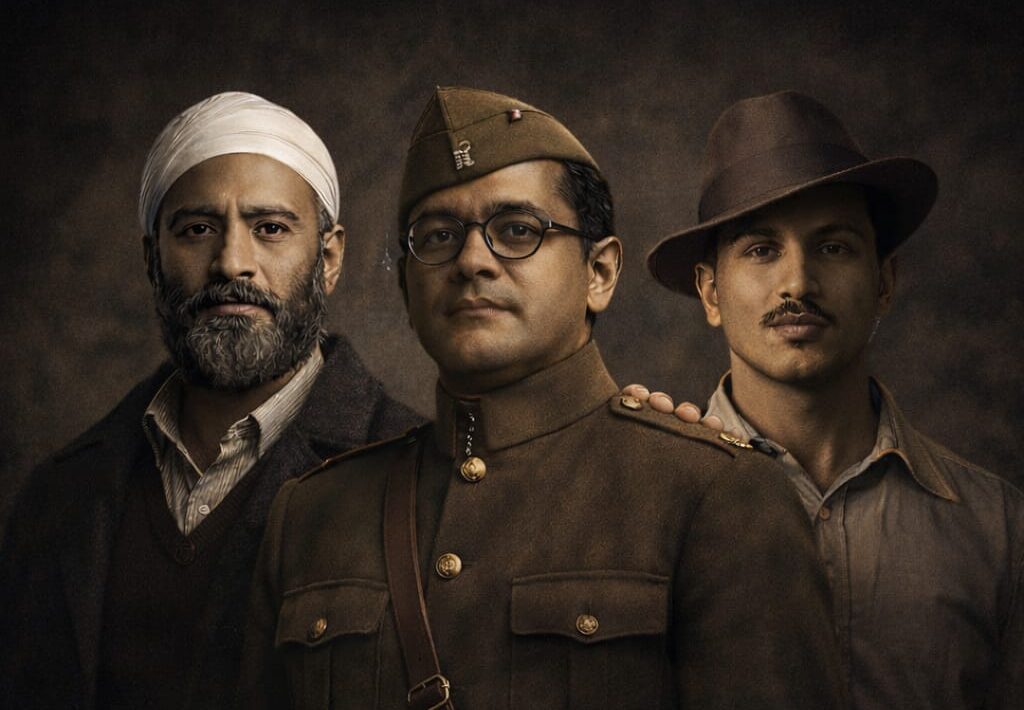
History has a strange habit. People celebrate revolutionaries after they are dead, but they attack the same ideas when they appear in the present. If figures like Bhagat Singh, Subhas Chandra Bose, and Udham Singh were alive today, many loud political voices would probably label them “anti-national.” That sounds absurd at first, but when you examine their real beliefs, the conflict becomes obvious.
The myth of these men is comfortable. The real ideology they carried was radical, secular, and openly rebellious against authority.
Bhagat Singh: A Revolutionary Atheist
Bhagat Singh was not just a freedom fighter with a gun. He was a political thinker.
He openly rejected religion. In his famous essay Why I Am an Atheist, he explained that belief in God was unnecessary for moral courage. That position alone would trigger outrage in today’s hyper-religious political environment.
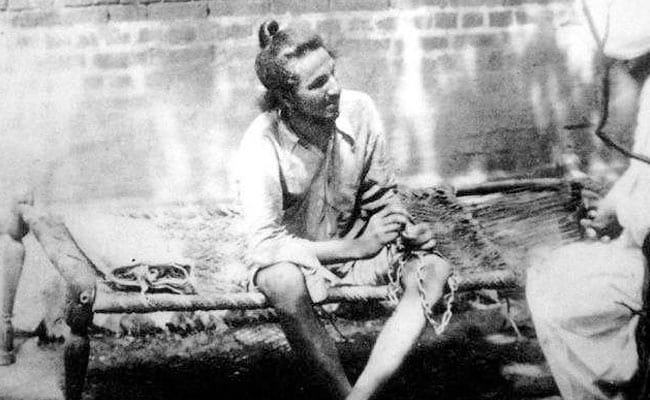
Singh was also deeply influenced by socialism and the global revolutionary movement. He admired thinkers like Marx and Lenin. His dream was not just independence from the British Empire. He wanted a socialist republic where exploitation and class hierarchy would disappear.
His organization, the Hindustan Socialist Republican Association, literally carried the word “socialist” in its name.
Modern nationalist politics often tries to frame nationalism through religion or cultural identity. Bhagat Singh rejected that entirely. For him, nationalism meant liberation of all people, regardless of religion, caste, or class.
A revolutionary atheist who criticizes religion and supports socialism would immediately be attacked in today’s political ecosystem.
Subhas Chandra Bose: Radical Secular Nationalist
Subhas Chandra Bose is often simplified as a patriotic military leader. The truth is more complicated.

Bose built the Indian National Army on strict secular principles. Soldiers from Hindu, Muslim, Sikh, and Christian communities served together. Religious identity was deliberately pushed aside.
His greeting was “Jai Hind.” Not a religious slogan. A national one.
He also supported socialist economic policies. Bose believed the new India should have strong state planning and social equality. That is far from the free-market nationalist rhetoric often heard today.
Even more controversial, Bose openly criticized conservative elites and caste hierarchy. He believed India needed a social revolution along with political independence.
In modern political debate, anyone who challenges religious nationalism or elite structures often receives the label “anti-national.” Bose would likely face that same accusation.
Udham Singh: Anti-Imperialist Beyond Religion
Udham Singh assassinated Michael O’Dwyer in 1940 as revenge for the Jallianwala Bagh massacre.
But something fascinating happened at his trial.
Udham Singh gave himself a symbolic name: Ram Mohammad Singh Azad.
This name combined Hindu, Muslim, and Sikh identities into a single declaration of unity. His message was clear. India belonged to all communities.
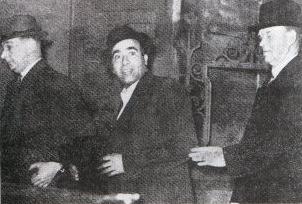
That idea of plural identity was powerful. It rejected religious division as the basis of nationalism.
Today, when politics often amplifies religious polarization, a revolutionary who insists that national identity transcends religion might be attacked by ideological groups on multiple sides.
Rationalism vs Emotional Nationalism
These three figures shared one critical trait.They believed nationalism must be rational. They questioned authority.
They criticized social injustice.
They rejected blind faith in religion or leaders.
Modern political nationalism often operates on emotional loyalty. It demands conformity and treats criticism as betrayal.
But Bhagat Singh openly criticized Indian society. Bose challenged political leadership when he disagreed with them. Udham Singh rejected religious identity politics.
In today’s environment, that kind of independent thinking often triggers accusations of disloyalty.
The Irony of History
People wave the photos of these revolutionaries in political rallies. At the same time, many reject the ideas those revolutionaries actually believed
15 Comments