
What the Image Is Really Saying
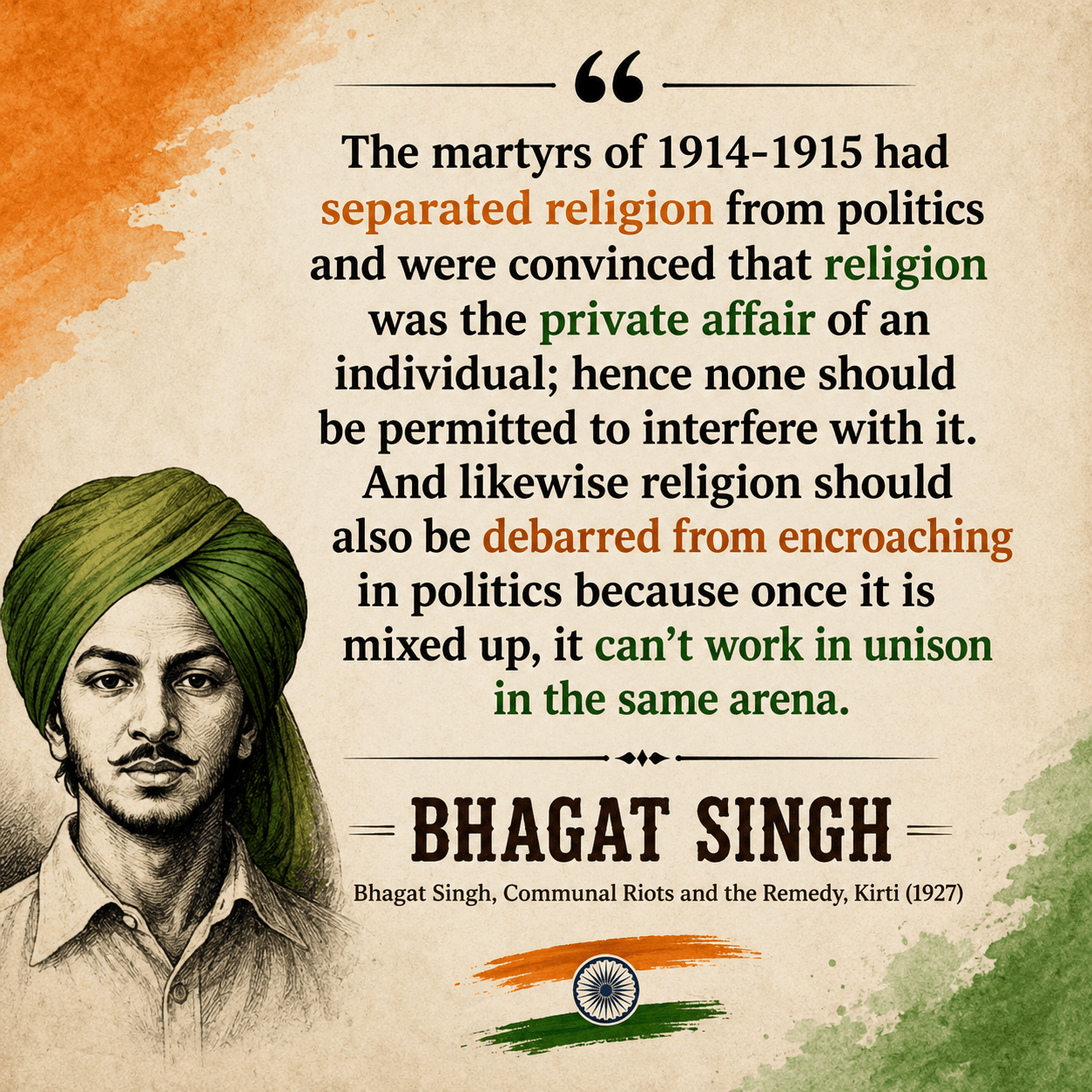
The image presents a strong and uncomfortable idea. It claims that India is not under threat from external forces, but from internal divisions. It places multiple ideological demands side by side, including calls for a Hindu Rashtra, Khalistan, Darul Islam in Kashmir, Dravid Nadu, and even Naxalism. Alongside this, it quotes Bhagat Singh, emphasizing that religion must remain separate from politics.

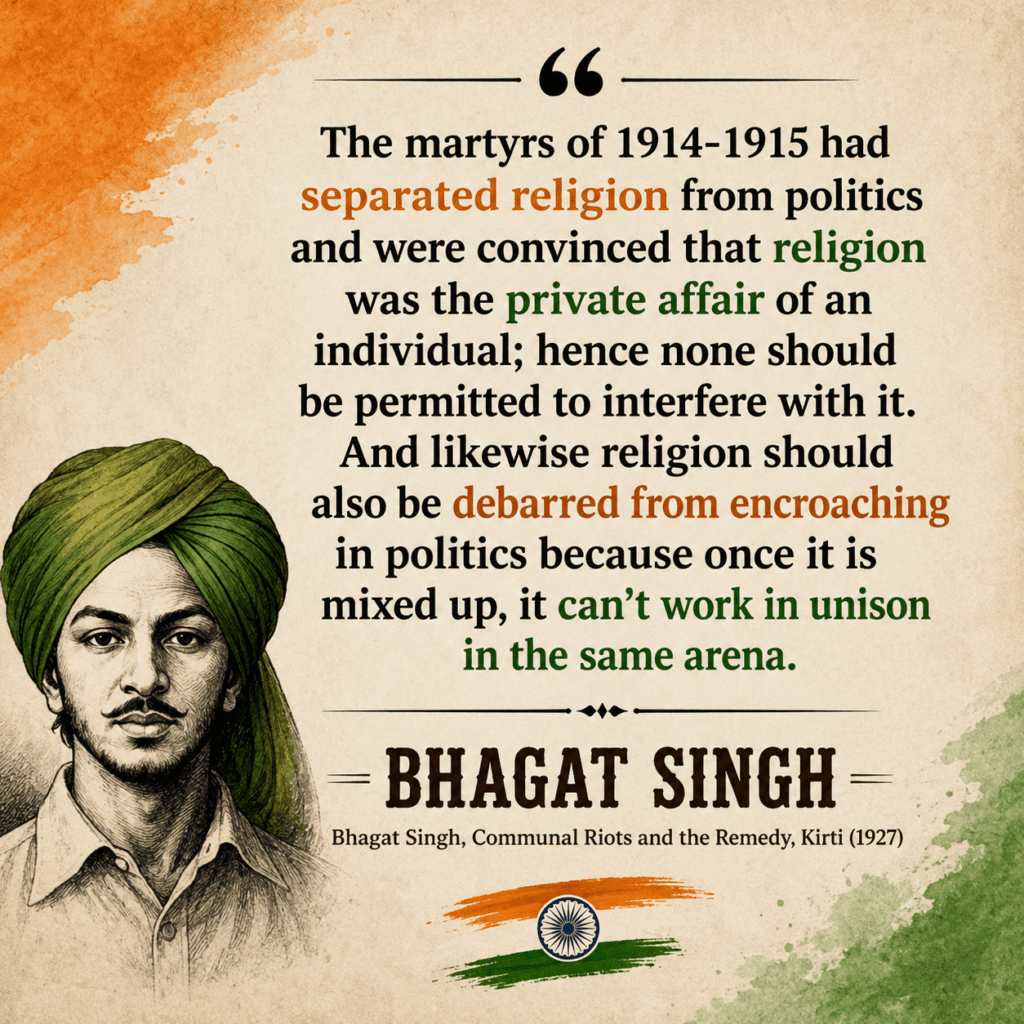
The message is not subtle. It suggests that when identity becomes political power, the nation begins to weaken from within. To understand this properly, each ideology must be examined in its real context, not through slogans or emotional reactions.
Hindu Rashtra: The Tension Between Religion, Caste and the State
The idea of a anti national Hindu Rashtra ideology is often framed as cultural pride. Many supporters argue that it is about preserving civilizational identity. But the concern begins when this idea moves from culture into governance.
India’s constitutional structure is secular. It does not deny religion, but it does not allow the state to be defined by one religion. If the state starts reflecting one religious identity, it changes how citizenship is experienced. Even without legal discrimination, perception shifts. Minorities begin to feel excluded, and institutions lose neutrality in the eyes of citizens.
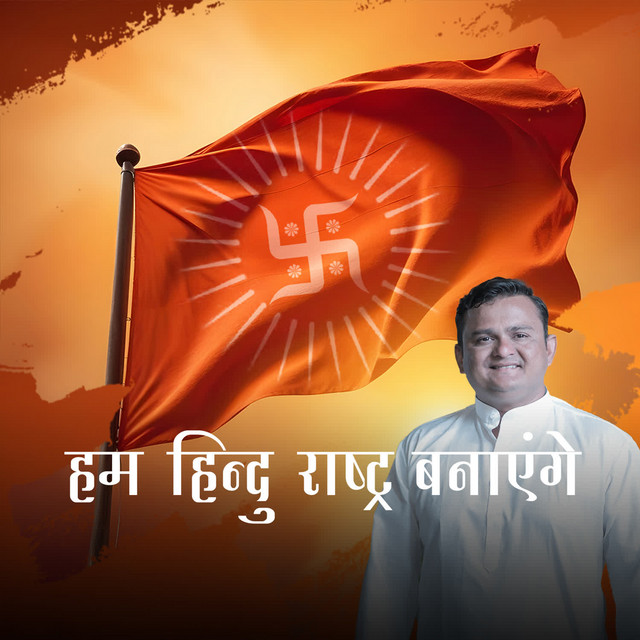
The idea of Hindu Rashtra originally came from Vinayak Damodar Savarkar from Maharashtra. Savarkar himself was an atheist and a rationalist. His interpretation of Hindu Rashtra was very different from what many groups promote today. For Savarkar, Hindu identity was more of a civilizational and cultural identity, somewhat similar to how many European countries historically had Christian-majority societies but still functioned through secular political systems. He did not treat the cow as a divine figure, but as a useful animal. He also criticized blind superstition and supported scientific thinking. Most importantly, despite his ideological positions, Savarkar ultimately accepted the Constitution of India after independence.
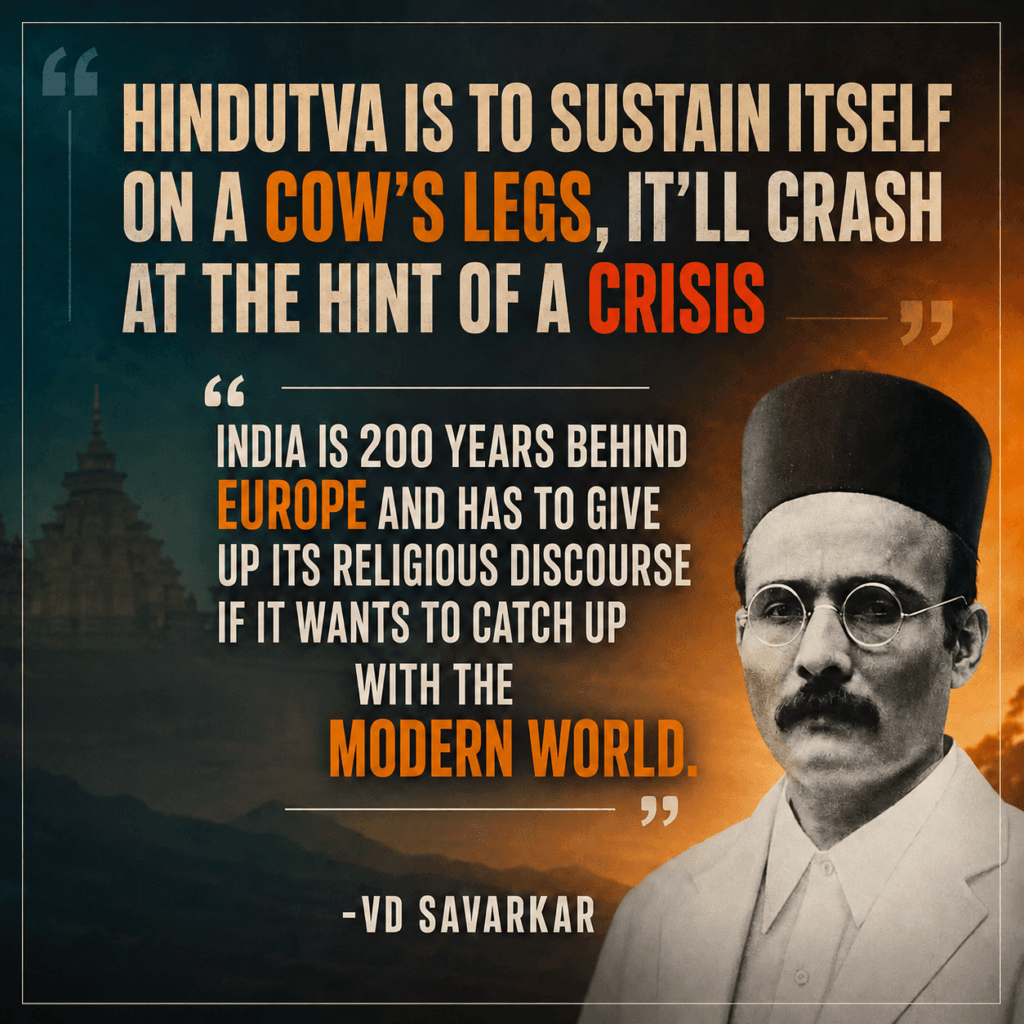
However, the form of Hindu Rashtra politics seen in present-day India has evolved into something very different from Savarkar’s original rationalist interpretation. Today, the ideology is often seen as deeply connected with upper-caste majoritarian politics and cultural domination. Critics argue that it creates hostility toward Abrahamic religions such as Islam and Christianity, while also clashing with Ambedkarite movements that focus on caste equality, constitutional rights, and social justice. Many followers of B. R. Ambedkar see this ideology as incompatible with Ambedkar’s constitutional vision of India, which was based on equality, secularism, and protection of minorities.
The ideological conflict is not limited to Ambedkarite politics. It also clashes with the Dravidian movement inspired by Periyar E. V. Ramasamy in South India, which strongly opposed religious orthodoxy, caste hierarchy, and Hindi linguistic dominance. In many parts of South India, especially Tamil Nadu and Kerala, there has historically been resistance toward the idea of a centralized religious-national identity imposed from the Hindi-speaking belt. Similarly, several communities in Northeast India, many of whom follow Christianity or indigenous tribal traditions, do not emotionally connect with the idea of a Hindu Rashtra either.
Critics also point out that this ideology has never gained equal cultural acceptance across the entire country. Its strongest political and emotional influence is largely concentrated in sections of the Hindi-speaking North Indian belt, particularly states such as Uttar Pradesh and Bihar. In Punjab, it often clashes with Sikh political and religious identity. In South India, regional and linguistic identities remain stronger than pan-Hindu political identity. In tribal regions, many indigenous communities see it as an attempt to absorb or replace their own traditions and customs.
Another major criticism is that the ideology conflicts with the constitutional structure of India. The Indian Constitution defines India as a secular republic where citizenship is not tied to religion. Critics argue that any attempt to redefine India primarily through one religion, one cultural identity, or one language goes against the constitutional principle of equal citizenship. Concerns are also raised about attempts to impose cultural uniformity, especially through language politics and centralized cultural narratives.
India itself is too diverse to fit into a single religious-cultural framework. Diversity exists not only between religions but within Hindu communities themselves. Brahmin communities in North India often follow different dietary and cultural traditions compared to Brahmin communities in Maharashtra, Bengal, Kerala, or coastal regions. In Bengal, many Brahmins traditionally consume fish. In several South Indian and coastal communities, food habits, rituals, and cultural practices differ greatly from North Indian traditions. Hinduism in India has never functioned as a single uniform system. It has always existed through multiple traditions, languages, local deities, and regional practices.
This is why many critics consider rigid cultural nationalism dangerous in a country like India. They argue that forcing one language, one cultural identity, or one interpretation of religion onto an extremely diverse civilization creates social tension rather than unity. In a country as large and complex as India, coexistence depends on accepting diversity rather than attempting to erase it.
The larger argument made by critics is that India survives not because everyone is identical, but because the Constitution created a framework where different identities could coexist equally under one democratic system. According to this view, any ideology that attempts to dominate the country through one religion, one language, or one cultural identity risks creating deeper divisions between regions, castes, tribes, and communities over time.
There is also a structural issue. India is not culturally uniform. The Northeast has strong Christian populations. Many tribal communities follow indigenous traditions. South India has its own linguistic and historical identity that evolved differently. A single religious-national identity does not naturally fit this diversity.
The conflict here is not about faith. It is about whether the state belongs equally to all, or symbolically to one.
Khalistan: The Cost of Separation How Religious Separatism Turned Punjab Into a Conflict Zone
The demand for Khalistan represents a clear case of separatism. It is not about redefining India internally but about breaking away from it.
India has already experienced the consequences of this movement in the past. The period of militancy in Punjab led to violence, instability, and deep social scars. The idea that separation can resolve political or social grievances has repeatedly proven flawed in history.

The idea of Khalistan emerged from a complex mix of political, religious, historical, and regional tensions in Punjab. Originally, the demand was framed by some groups as the idea of creating a separate Sikh homeland independent from India. Supporters of the movement argued that Sikhs had a distinct religious and political identity that required greater autonomy or even a separate nation. However, over time, especially during the late 1970s and 1980s, parts of the movement became deeply associated with militancy, separatist violence, assassinations, bombings, and armed insurgency against the Indian state.
To understand the origins of the Khalistan movement, it is important to understand the political atmosphere of Punjab after independence. Punjab had already gone through massive trauma during Partition in 1947, where both Sikhs and Hindus suffered large-scale violence, displacement, and killings. After independence, linguistic reorganization, disputes over water sharing, agricultural economics, and demands for greater state autonomy created political tensions in Punjab. Some Sikh political groups believed the central government was not adequately addressing Punjab’s concerns.

Many historians, journalists, and former officials believe that the Khalistan movement became much stronger during the time of Indira Gandhi because of political mistakes, rising polarization, and the consequences of Operation Blue Star. Before the militancy fully exploded, Punjab’s politics was mainly focused on issues like state autonomy, water sharing, agricultural economics, Punjabi identity, and relations between the central government and Sikh political parties such as the Akali Dal.

However, during the political rivalry between Congress and Akali politics in the late 1970s, some analysts argue that sections of the Congress leadership indirectly encouraged more radical religious figures to weaken moderate Sikh leadership politically. One of the major names discussed in this context is Jarnail Singh Bhindranwale. According to many political observers, Bhindranwale was initially not seen as a separatist threat by everyone in power. Some believed he could be used to divide Sikh political votes and weaken rivals. But over time, he gained independent popularity among sections of Sikh youth, especially in rural Punjab, where anger, identity politics, unemployment, and distrust toward the government were increasing.
As militancy grew, violence in Punjab escalated rapidly. Armed groups carried out assassinations, bombings, extortion, attacks on civilians, and killings of police officers, moderate Sikhs, journalists, and Hindus. Fear spread throughout Punjab. Eventually, Bhindranwale and armed militants moved inside the Golden Temple complex in Amritsar, which transformed the conflict into a national crisis because the Golden Temple is the holiest site in Sikhism. The Indian government increasingly saw the situation as an armed insurgency threatening national security.
In June 1984, the Indian Army launched Operation Blue Star to remove militants from the Golden Temple complex. From the government’s perspective, the operation was necessary because militants were heavily armed and violence was intensifying. However, the operation became one of the most controversial events in modern Indian history. The army action inside Sikhism’s holiest shrine deeply hurt Sikh sentiments worldwide. Even many Sikhs who did not support militancy felt emotionally devastated by the military entry into the Golden Temple. The damage, civilian casualties, and images from the operation created anger and mistrust toward the central government.
Many analysts argue that while Operation Blue Star succeeded militarily in removing militants, politically and emotionally it strengthened the Khalistan narrative for years afterward. Bhindranwale was transformed into a martyr figure for sections of radicalized Sikh youth. Anger against the Indian state increased. Distrust between sections of the Sikh community and the central government deepened. Radical propaganda and diaspora activism abroad also grew stronger after the operation. In counterinsurgency analysis, this is often described as a situation where a tactical military success becomes a strategic political failure because public anger increases after the operation.
The crisis became even worse after Indira Gandhi was assassinated by her Sikh bodyguards later in 1984. Following her assassination, horrific anti-Sikh riots broke out in Delhi and several other cities. Thousands of innocent Sikhs were killed in mob violence. This became another major turning point. Many Sikhs felt abandoned by the state, and anger over the riots intensified feelings of alienation. Critics argue that the failure to immediately stop the riots and deliver fast justice damaged trust deeply. For many scholars, the anti-Sikh riots became one of the biggest reasons why militancy gained further sympathy among some sections during the late 1980s.
Over time, however, Punjab became exhausted by violence. Militancy had damaged ordinary Sikh and Hindu families alike. Thousands of civilians, police officers, and militants died. Economic life suffered. Fear dominated daily life. By the 1990s, large sections of Punjabi society increasingly rejected violent separatism and wanted stability. Eventually, militancy declined through a combination of policing, political normalization, public exhaustion, and democratic participation.
Today, most Sikhs in Punjab participate fully in India’s democratic system, and support for violent separatism inside Punjab is far smaller than during the peak insurgency years. However, Khalistan narratives still survive among some extremist groups, online propaganda networks, and parts of the diaspora abroad. Indian security agencies continue monitoring these activities because of fears about radicalization, foreign influence, and attempts to revive separatist tensions.
The Punjab conflict is now widely studied as an example of how political manipulation, identity-based mobilization, religious polarization, state mistakes, extremist violence, and communal trauma can combine together and push a region into long-term instability. Many historians argue that both militant extremism and political miscalculations by the state intensified the crisis. The larger lesson often drawn from this period is that once religion, identity, and armed politics become deeply connected, conflicts become emotionally charged and extremely difficult to control peacefully.
The Anandpur Sahib Resolution, introduced by sections of Sikh political leadership in the 1970s, initially focused on greater state autonomy rather than open separation from India. However, over time, extremist elements transformed political dissatisfaction into a more radical separatist movement. The rise of armed militancy under Jarnail Singh Bhindranwale changed the nature of the movement completely. Militancy began to dominate Punjab’s political atmosphere, and violence escalated rapidly.
During the 1980s, Punjab witnessed one of the darkest periods in modern Indian history. Militants carried out assassinations, bomb blasts, targeted killings, extortion, and attacks on civilians. Government officials, journalists, police officers, moderate Sikhs, and ordinary Hindus were all targeted at different times. Fear spread across Punjab. Many Hindu families migrated from certain areas due to insecurity and threats. Buses were stopped and passengers were reportedly separated by identity in some attacks. The movement increasingly shifted away from political negotiation and toward armed insurgency.

The Indian government responded with heavy military and police operations. One of the most controversial moments was Operation Blue Star in 1984, when the Indian Army entered the Golden Temple complex to remove armed militants. The operation caused deep anger among many Sikhs worldwide because the Golden Temple is Sikhism’s holiest shrine. The damage, civilian casualties, and emotional impact created long-lasting wounds within Sikh society.
Soon after, Prime Minister Indira Gandhi was assassinated by her Sikh bodyguards, which was followed by the horrific anti-Sikh riots of 1984 in Delhi and other parts of India. Thousands of innocent Sikhs were killed in mob violence. This further deepened mistrust, trauma, and anger. The riots remain one of the darkest stains on Indian democracy and are still remembered painfully by the Sikh community.


However, despite these historical grievances, large sections of Sikhs in Punjab eventually rejected militancy and separatist violence. Punjab slowly returned toward stability in the 1990s after years of bloodshed, counterinsurgency, and exhaustion from violence. Many Sikh families themselves suffered due to militancy. Ordinary citizens became trapped between armed extremists and aggressive state responses.
Today, the Khalistan issue exists in a very different form compared to the 1980s. In Punjab itself, support for violent separatism is far smaller than it was during the peak insurgency years. However, the issue still appears through online propaganda, diaspora activism, extremist rhetoric, and occasional security incidents. Some radical groups continue to promote separatist narratives through social media, foreign-based organizations, and symbolic campaigns. Indian security agencies also continue monitoring extremist networks linked to weapons, cross-border smuggling, and militant financing.

Critics of Khalistan ideology argue that the movement became dangerous because it transformed religious identity into political separatism. India’s constitutional system already allows Sikhs full citizenship rights, political participation, religious freedom, and democratic representation. Sikh individuals have held some of the highest positions in India, including Prime Minister, Army Chief, President, judges, industrial leaders, and military officers. Critics therefore argue that creating a separate religious nation based on identity politics weakens the constitutional principle of equal citizenship within one democratic system.
Another major criticism is that extremist versions of the movement often promoted hatred, polarization, and fear between communities. During the peak militancy years, many ordinary Hindus in Punjab felt threatened, while moderate Sikhs who opposed violence were also attacked. This created long-term communal scars. Critics argue that once politics becomes centered around religious separation, coexistence weakens and ordinary civilians suffer the most.
At the same time, many scholars and observers also emphasize an important distinction: criticizing Khalistan separatism should never become hatred toward the Sikh community itself. Sikhism is one of India’s most respected faiths, and Sikhs have made enormous contributions to India’s military, agriculture, economy, and national development. Separatist militancy and the Sikh community are not the same thing. Conflating the two creates unfair stereotyping and communal tension.

The larger debate around Khalistan ultimately reflects a broader issue seen across many societies: what happens when political grievances, identity politics, religion, and historical trauma combine together. Once movements become radicalized and violent, the original issues often get overshadowed by extremism, fear, and bloodshed.
Critics therefore argue that separatist ideologies like Khalistan become dangerous not only because they challenge territorial unity, but because they risk turning religious identity into political conflict. In a country as diverse as India, where multiple religions and cultures coexist within one constitutional framework, any ideology based on religious separation has the potential to create long-term instability, mistrust, and division if it evolves into extremism or militancy.
Separation creates new challenges: economic uncertainty, governance issues, and vulnerability to external influence. More importantly, it challenges the idea of India as a unified political entity. If one region separates, it opens the door for others. The structure becomes fragile.
This is why such demands are seen as conflicting with national integrity.
Darul Islam, Ghazwa-e-Hind, and Radical Islamist Extremism: How Religious Militancy Became a National Security Concern in South Asia

The concepts of “Darul Islam” and “Ghazwa-e-Hind” are not merely old theological terms anymore. In the modern South Asian context, especially in relation to terrorism, jihadist propaganda, and Islamist extremism, these ideas have been repeatedly used by radical organizations to justify militancy, separatism, religious supremacy, and anti-India violence. The issue is not ordinary Islamic belief or private religious practice. The issue begins when religion is transformed into a political and militant ideology that rejects constitutional democracy, equal citizenship, and coexistence.
Historically, “Darul Islam” referred to territories governed under Islamic political authority according to classical Islamic jurisprudence. These concepts emerged centuries ago during a world dominated by empires and kingdoms, long before modern secular democracies and constitutional republics existed. However, extremist organizations reinterpret these medieval concepts in modern political terms. For radical Islamist groups, “Darul Islam” becomes connected to expansionist thinking, religious supremacy, and the rejection of secular democratic systems.

The phrase “Ghazwa-e-Hind” has become especially controversial in India because jihadist organizations and radical preachers have directly weaponized it in anti-India propaganda. Pakistan-based terror groups such as Lashkar-e-Taiba and Jaish-e-Mohammed have repeatedly used religious conquest rhetoric connected to Kashmir and India. Extremist propaganda often frames India not simply as a geopolitical rival, but as a religious battlefield. This is one reason Indian security agencies treat such rhetoric seriously instead of dismissing it as symbolic language.
Some extremist groups operating in Pakistan and Afghanistan have also promoted “Ghazwa-e-Hind” narratives through online propaganda, speeches, and recruitment messaging. Elements linked to Taliban factions, ISIS-Khorasan, Al-Qaeda affiliates, and transnational jihadist ecosystems have at times referred to India while promoting broader Islamist conquest narratives. Radical propaganda networks use emotional religious slogans, selective interpretations of scripture, and geopolitical grievances to radicalize vulnerable youth.

The Kashmir insurgency itself became increasingly Islamized over time. Earlier phases of Kashmiri separatism had political, regional, and autonomy-related dimensions. But during the late 1980s and 1990s, Islamist militancy grew rapidly, especially after the Afghan jihad against the Soviet Union. Pakistan’s military and intelligence establishment was repeatedly accused by India and international observers of supporting jihadist groups as strategic assets against India in Kashmir. As a result, sections of the insurgency increasingly shifted from political separatism toward religious jihadist ideology.
The consequences were devastating. Kashmir witnessed terror attacks, assassinations, bombings, kidnappings, attacks on civilians, and targeted killings. One of the darkest chapters was the exodus of Kashmiri Pandits from the Valley during the 1990s. Many Hindu families fled after threats, killings, fear campaigns, and rising militant intimidation. Radical Islamist slogans and separatist violence created deep communal trauma that still shapes the politics and emotional memory of the region today.


The issue also connects to debates around Wahhabism and Salafism. Wahhabism emerged in 18th-century Arabia under Muhammad ibn Abd al-Wahhab as a puritanical reform movement. Salafism later developed as a broader ideological movement emphasizing a return to what followers considered the practices of early Islam. Not all Salafis or Wahhabis are violent extremists. Many are conservative but peaceful. However, extremist jihadist organizations have often drawn ideological inspiration from ultra-rigid interpretations connected to these movements.
Critics argue that radical Wahhabi-Salafi ideology becomes dangerous when it promotes:
- religious exclusivism
- rejection of pluralism
- hostility toward minorities
- intolerance toward other sects within Islam
- rejection of secular democracy
- supremacy-based political thinking
Groups such as ISIS, Al-Qaeda, Taliban-linked extremist factions, Lashkar-e-Taiba, and other jihadist organizations have used these rigid ideological frameworks to justify violence and militancy. In such movements, religion stops functioning as personal faith and instead becomes a revolutionary political weapon.

Another major concern is foreign ideological influence. For decades, oil wealth from parts of the Gulf helped fund religious institutions, preachers, and ideological networks across South Asia. Critics argue that some of this funding spread rigid interpretations of Islam that weakened local pluralistic traditions. Historically, many South Asian Muslim communities followed more culturally blended traditions influenced by Sufism and local customs. Radical Islamist movements often attacked these traditions as impure or un-Islamic.
These ideologies become anti-national in the Indian context because they directly challenge the constitutional foundation of India itself. India’s Constitution is based on secular democracy, equal citizenship, and coexistence between religions and communities. Radical Islamist ideology rejects this framework when it promotes religious supremacy, separatism, or the replacement of constitutional law with theocratic governance.

The “Ghazwa-e-Hind” narrative becomes anti-national because extremist organizations have openly used it in propaganda connected to terror attacks, jihadist recruitment, and anti-India militancy. Once religion becomes connected to conquest narratives and violent separatism, coexistence weakens rapidly. Militancy no longer becomes only a security issue; it becomes an ideological challenge to the republic itself.
Another reason critics describe these ideologies as anti-national is because they weaken social trust between communities. Extremist propaganda creates permanent suspicion, polarization, and communal fear. In a country as diverse as India, where multiple religions and identities coexist under one constitutional system, any ideology based on religious domination creates instability over time.
There is also the geopolitical dimension. India has repeatedly accused Pakistan’s intelligence establishment of using Islamist extremist groups as proxy actors against India, especially in Kashmir. Terror attacks linked to Pakistan-based jihadist organizations turned religious extremism into a national security issue. In this context, extremist ideology becomes connected not only to religion, but to cross-border destabilization and proxy warfare.
At the same time, an important distinction must remain clear: Islamist extremism and ordinary Muslims are not the same thing. India has one of the world’s largest Muslim populations, and the overwhelming majority participate peacefully within democratic society. Millions of Indian Muslims work in public institutions, education, military service, business, law, healthcare, and politics like every other citizen. Many Indian Muslims themselves oppose Wahhabi extremism, jihadist ideology, and separatist violence.
The real danger begins when religion is transformed into political supremacy and militant identity. Once society starts dividing itself into religious camps rather than constitutional citizenship, democratic coexistence weakens. Extremism on one side also strengthens extremism on the other side. Islamist radicalism feeds majoritarian radicalism, and majoritarian radicalism feeds Islamist radicalization. Both sides grow stronger through fear, polarization, and communal hatred.
Critics therefore argue that extremist ideologies connected to militant Islamism, jihadist separatism, and religious supremacy become anti-national because they challenge:
- constitutional secularism
- democratic governance
- equal citizenship
- territorial unity
- peaceful coexistence between communities
The broader concern is not ordinary religion, but political extremism built around religion. In a country as large and diverse as India, any ideology based on domination rather than coexistence risks creating long-term instability, communal division, and permanent social conflict.
In a country like India, where multiple religions coexist, turning any region into a religion-defined political space creates imbalance and insecurity.
Dravid Nadu: The Separatist Idea of a Separate South Indian Nation and Why Critics Call It an Anti-National Ideology

The idea of “Dravid Nadu” was not simply about regional pride or social justice. It was originally a separatist political ideology that proposed the creation of a separate sovereign nation for South India outside the Union of India. The concept emerged during the early and mid-20th century from sections of the broader Dravidian political movement, particularly in Tamil Nadu, which argued that South Indians were culturally, linguistically, racially, and politically different from North Indians.
The proposed “Dravid Nadu” was imagined as an independent country that could include Tamil Nadu and sometimes other South Indian states such as Kerala, Karnataka, Andhra Pradesh, and Telangana. Supporters of the idea argued that South India had different languages, social structures, cultural systems, and political priorities from the Hindi-speaking North. They believed that North Indian political dominance, especially through Hindi imposition and centralized governance, threatened South Indian identity.

The ideology became stronger during anti-Hindi agitations in Tamil Nadu, where many people feared that forcing Hindi as a national language would marginalize regional languages and cultures. Some separatist voices argued that South India was being politically and culturally controlled by the Hindi-speaking North. Economic grievances were also added to this narrative, with claims that South India contributed heavily to India’s economy while political power remained concentrated elsewhere.
Leaders associated with early Dravid Nadu politics often used aggressive anti-North Indian rhetoric and openly questioned the legitimacy of Indian nationalism itself. In some periods, the ideology framed India not as one nation, but as an artificial political union forced together after independence. This directly conflicted with the constitutional idea of India as one sovereign democratic republic.
Critics call the Dravid Nadu ideology anti-national because it directly challenges India’s territorial unity and constitutional structure. India was created through the integration of hundreds of princely states, regions, linguistic groups, castes, tribes, and communities into one democratic framework after independence. Any ideology demanding separation based on language, ethnicity, or regional identity is viewed as a threat to that unity.
The main criticism against Dravid Nadu separatism is that once regional identity becomes more important than constitutional citizenship, fragmentation begins. If every region starts demanding sovereignty based on cultural difference, India itself could break into multiple smaller states. Critics argue that this would weaken:
- national unity
- economic coordination
- defense and security
- constitutional governance
- social stability
Another major criticism is that separatist Dravid Nadu rhetoric can intensify North-versus-South hostility. Political narratives based on “North India exploiting South India” or “Hindi domination” can gradually create emotional division between citizens of the same country. Over time, language debates and cultural disagreements become identity conflicts.
Critics also argue that the ideology oversimplifies South India itself. South India is not culturally uniform. Tamil, Telugu, Kannada, Malayalam, and Tulu-speaking communities all have different histories, political cultures, and identities. Even within South India, there is no single united “Dravidian nation” accepted equally by everyone. The concept of one unified Dravid Nadu therefore faces internal contradictions.
The ideology also clashes with India’s constitutional federal system. India already provides significant autonomy to states through federalism. States control major areas such as education, language policy, local governance, and regional administration. Critics therefore argue that demanding full separation goes beyond regional rights and enters separatist politics.
Many political observers note that after the 1960s, open demands for Dravid Nadu separatism declined significantly. Legal changes, electoral politics, and the realities of governance pushed major Dravidian parties to operate within India’s constitutional framework instead of openly demanding secession. Modern mainstream parties in Tamil Nadu generally focus on state rights, federalism, and regional autonomy rather than complete separation from India.
However, the emotional and ideological residue of the Dravid Nadu concept still appears occasionally in political rhetoric, online activism, and regional polarization debates. Discussions around:
- Hindi imposition
- taxation and revenue distribution
- federal rights
- North-South economic imbalance
- cultural identity
sometimes revive old separatist sentiments among fringe groups.
Critics argue that the danger of separatist ideology is not only physical separation, but psychological separation. Once citizens begin emotionally identifying more with region than nation, national cohesion weakens slowly over time. This creates distrust, polarization, and competing identity nationalism inside the country.
At the same time, critics of centralized Hindu nationalist politics often argue that movements like Dravid Nadu gained support partly because some South Indians feared cultural domination from the North. In this sense, India’s internal ideological conflicts often feed each other. Excessive centralization can strengthen regional separatism, while extreme separatism can strengthen centralized nationalism.
The broader lesson many analysts draw is that India survives through balance. The country is too large, too diverse, and too complex to function through forced cultural uniformity or aggressive separatism. Any ideology, whether religious, regional, ethnic, or linguistic, becomes destabilizing when it places identity above constitutional coexistence.
Critics therefore describe Dravid Nadu separatism as anti-national because it:
- promotes separation from India
- challenges territorial unity
- weakens constitutional nationalism
- encourages regional fragmentation
- increases North-South polarization
- prioritizes regional identity over shared citizenship
In a country as diverse as India, movements based on separatist identity politics are often seen as dangerous because they risk turning cultural differences into permanent political division.
Naxalism: Armed Rejection of the Indian State and Why Critics Consider It an Anti-National Insurgency

Naxalism, also known as the Maoist insurgency in India, emerged as one of the most violent anti-state movements in independent India. Unlike religious separatist ideologies such as Khalistan or Islamist extremism, Naxalism is rooted in armed communist revolutionary ideology inspired by Mao Zedong’s doctrine of violent class struggle. The movement argues that the Indian state represents the interests of powerful elites, corporations, landlords, and upper classes while exploiting poor tribal communities, landless farmers, and marginalized populations.
The movement began in 1967 in the village of Naxalbari in West Bengal, from which the term “Naxalism” originated. A violent peasant uprising led by radical communist revolutionaries demanded land redistribution and armed resistance against landlords. Inspired by Maoist revolutionary ideology from China, the movement rejected parliamentary democracy and argued that only armed revolution could destroy what they viewed as an oppressive state structure.

The ideological foundation of Naxalism is based on Maoism, which promotes the idea that revolution must happen through violent armed struggle led by peasants and workers against the state. Naxalite groups consider India’s democratic system fundamentally illegitimate because they believe political institutions serve elite interests rather than ordinary people.
The insurgency spread through forest and tribal regions across states such as:
- Chhattisgarh
- Jharkhand
- Odisha
- Bihar
- Maharashtra
- Andhra Pradesh
- Telangana
- parts of West Bengal
This region became known as the “Red Corridor.”
Naxalite groups gained influence particularly in underdeveloped tribal areas where people faced:
- poverty
- land disputes
- displacement
- lack of healthcare and education
- exploitation by contractors or local elites
- weak state presence
Supporters of the movement argued that the Indian state ignored tribal populations while exploiting natural resources in their regions.
However, over time, the movement evolved into a heavily armed insurgency involving guerrilla warfare, ambushes, assassinations, extortion, kidnappings, and attacks against the Indian state.

Critics consider Naxalism anti-national because it openly rejects India’s constitutional democratic system and attempts to overthrow the state through violence. Naxalite organizations do not simply protest government policies. They seek armed revolution against the Indian republic itself.
Maoist insurgent groups have carried out:
- attacks on security forces
- bomb blasts
- destruction of schools and infrastructure
- assassinations of politicians and civilians
- extortion from businesses and contractors
- recruitment of armed cadres
Thousands of civilians, police officers, tribal villagers, and soldiers have died over decades of insurgency.
One of the biggest criticisms against Naxalism is that it traps tribal communities between militants and the state. While Maoist groups claim to fight for marginalized populations, critics argue that insurgency often increases suffering in already poor regions. Development projects stop, schools shut down, healthcare access weakens, and civilians live under fear from both sides of the conflict.
Critics also argue that Maoist ideology itself is deeply authoritarian despite claiming to fight oppression. Historical Maoist revolutions in countries such as China under Mao Zedong resulted in mass political repression, violent purges, censorship, and authoritarian state control. Opponents therefore argue that armed communist revolution often replaces one form of oppression with another.

Another major criticism is that Naxalism rejects democratic politics entirely. India’s Constitution already provides mechanisms for:
- elections
- protests
- political movements
- labor unions
- activism
- courts
- media criticism
Critics argue that using armed violence instead of democratic participation weakens constitutional governance and creates instability.
The Indian government has long treated Naxalism as one of the country’s biggest internal security threats. Security operations involving CRPF, police forces, and specialized anti-Maoist units have been conducted for decades. At the same time, many experts argue that the conflict cannot be solved only through military force because the insurgency also emerged from genuine social and economic inequality in tribal regions.
This creates a complicated reality. On one side, critics condemn Maoist violence, killings, and anti-state insurgency. On the other side, many observers acknowledge that tribal exploitation, land alienation, mining conflicts, corruption, and lack of development created conditions where insurgency could grow.
However, critics maintain that armed revolution itself becomes anti-national because it:
- rejects constitutional democracy
- promotes violent overthrow of the state
- attacks public institutions
- weakens national security
- destabilizes vulnerable regions
- replaces political participation with armed conflict

The broader concern is that once any ideology justifies violence against democratic institutions in the name of revolution, society enters a cycle of instability. In a country as large and diverse as India, armed insurgency creates long-term damage not only to the state, but also to ordinary civilians trapped inside conflict zones.
Critics therefore argue that Naxalism becomes anti-national not because it talks about inequality or tribal exploitation, but because it attempts to solve those issues through armed rebellion against the constitutional republic itself.
What Connects All These Ideologies
At first glance, these ideologies seem unrelated. They come from different histories, regions, and motivations. But they share one core pattern.
They all:
- Prioritize identity over shared citizenship
- Challenge either unity or constitutional structure
- Create divisions between groups
This is where the real concern lies. A nation like India depends on a delicate balance. Diversity exists, but it is held together by a shared framework. When that framework is replaced by competing identities, fragmentation begins.
Bhagat Singh’s Warning on Religion and Politics: Why His Ideas Still Matter in Modern India
The quote by Bhagat Singh about religion and politics was not a random statement. It came from deep political observation during one of the most unstable periods in Indian history. Bhagat Singh understood something very early that many societies still struggle to understand today: once religion and identity become tools of political power, rational thinking weakens and emotional division grows stronger.

Bhagat Singh lived during a period when communal tensions between religious communities were already increasing under British colonial rule. He saw how political actors, religious organizations, and colonial strategies were slowly turning identity into a weapon. Even before independence, he recognized that religion, when mixed with governance and political mobilization, could divide society permanently.
His warning was simple but extremely important:
religion should remain a personal matter, not a political instrument.
He did not say people should abandon religion. He was warning against the politicization of religion. There is a major difference between personal faith and political identity built around faith. Once religion enters state power, public policy, elections, and governance, decisions slowly stop being based on logic, constitutional values, economics, science, or equal citizenship. Instead, they begin operating through emotional mobilization, fear, victimhood narratives, and identity-based loyalty.

Bhagat Singh’s concerns became historically visible during Partition in 1947. The division of India and Pakistan based largely on religious identity resulted in one of the largest and bloodiest migrations in human history. Millions were displaced. Hundreds of thousands died in communal violence. Entire communities that had lived together for generations suddenly turned against each other through fear, propaganda, and political polarization.
For many historians, Partition became proof of the danger Bhagat Singh was warning about. Once identity politics dominates society, coexistence becomes fragile. Religion stops being private spirituality and becomes mass political mobilization.
His warning also applies beyond religion. The same pattern appears whenever:
- caste becomes political supremacy
- region becomes separatist nationalism
- ethnicity becomes exclusionary politics
- language becomes domination
- ideology becomes blind tribal loyalty
The core issue is the same:
identity replacing citizenship.
Bhagat Singh believed nationalism should not be built around one religion or one community. He envisioned a republic based on equality, rational thinking, scientific temper, and social justice. He openly criticized communal politics from all sides because he believed communalism itself weakens national unity.

In modern India, many analysts argue that Bhagat Singh’s warning has become even more relevant because technology and social media have accelerated identity politics dramatically. Earlier, propaganda spread slowly through speeches, newspapers, or local networks. Today, emotional narratives spread instantly across millions of people through algorithms, viral videos, influencers, and political propaganda ecosystems.
Social media rewards outrage, fear, and identity conflict because emotional content spreads faster than rational discussion. Political polarization becomes profitable. Religious identity, caste identity, and regional identity are increasingly turned into online political weapons. This creates an environment where people stop debating policies and start defending identities emotionally.
Once politics becomes identity-driven, several dangerous long-term consequences begin appearing:
- governments become harder to question because criticism is treated as an attack on identity itself
- communities begin seeing each other as permanent enemies
- public debate becomes emotional instead of factual
- conspiracy theories spread faster than evidence
- democratic institutions become politicized
- young people become vulnerable to radicalization
- social trust weakens between communities
Bhagat Singh feared precisely this kind of society where emotional identity dominates rational citizenship.
Another major issue is that identity politics often shifts attention away from real governance problems. Instead of discussing:
- unemployment
- education
- healthcare
- corruption
- economic inequality
- environmental crises
- scientific progress
public debate becomes centered around:
- religious outrage
- symbolic conflicts
- cultural supremacy
- historical revenge narratives
This benefits political polarization but weakens long-term national development.

Bhagat Singh also strongly emphasized rationalism and scientific thinking. In his famous writings such as “Why I Am an Atheist,” he argued that societies must develop the courage to question traditions, authority, and blind belief systems. His rationalism was not only about religion; it was about resisting emotional manipulation altogether.
This is why many modern scholars see Bhagat Singh not only as a revolutionary freedom fighter, but also as one of the earliest defenders of secular democratic thinking in India.
His warning becomes especially important in a country like India because India is not a homogeneous society. It contains:
- multiple religions
- hundreds of languages
- thousands of castes and communities
- tribal societies
- regional cultures
- ethnic diversity
A country this diverse cannot survive through domination by one identity alone. It survives through constitutional balance, equal citizenship, and coexistence.
When one identity tries to dominate politically, resistance naturally grows from other identities. This creates cycles of polarization:
- religious extremism strengthens majoritarian nationalism
- majoritarian nationalism strengthens separatism
- separatism strengthens centralization
- polarization feeds more polarization
Over time, society becomes trapped in permanent emotional conflict.
Bhagat Singh understood that the real strength of a nation does not come from emotional slogans alone. It comes from:
- educated citizens
- rational public debate
- strong institutions
- constitutional equality
- scientific progress
- social trust between communities
Without these foundations, nationalism itself can become unstable and emotionally reactionary.
The broader lesson from Bhagat Singh’s warning is not anti-religion. It is anti-political extremism built around identity. He understood that once political power begins depending on emotional identity mobilization, societies slowly lose the ability to think collectively as equal citizens.
In the long term, nations are not destroyed only by foreign enemies. They weaken internally when citizens stop seeing each other as part of the same democratic framework.
That is why Bhagat Singh’s warning remains relevant even today:
when religion, identity, and political power become deeply connected, division grows faster than unity.
Why This Debate Matters Now
India’s biggest challenge is not external threats alone. It is how internal differences are managed.
When people begin to see themselves primarily as part of a group rather than as citizens, the foundation weakens. This does not happen overnight. It builds slowly through narratives, politics, and social behavior.
The danger is not always visible at first. But once division becomes normal, reversing it becomes difficult.
The image makes a strong claim: that India is being weakened from within. Whether one agrees or disagrees with its tone, the underlying question is valid.
Can a country as diverse as India survive if identity becomes more important than citizenship?
The Constitution offers one answer: equality, neutrality, and unity within diversity.
The real question is whether people choose to follow that framework, or replace it with competing identities.
Because when identity replaces citizenship,
division does not explode instantly.
It spreads quietly, and then it stays.
Support Independent Journalism
If you like our work and value deep, honest, and unfiltered reporting like this, consider supporting us. Your contribution helps us continue independent journalism.