
What Was The Narada Sting Operation?
The Narada sting operation became one of the biggest political controversies in West Bengal before the 2016 Assembly elections. Journalist Mathew Samuel and Narada News released hidden camera videos allegedly showing several Trinamool Congress leaders accepting cash from people posing as representatives of a fake company.

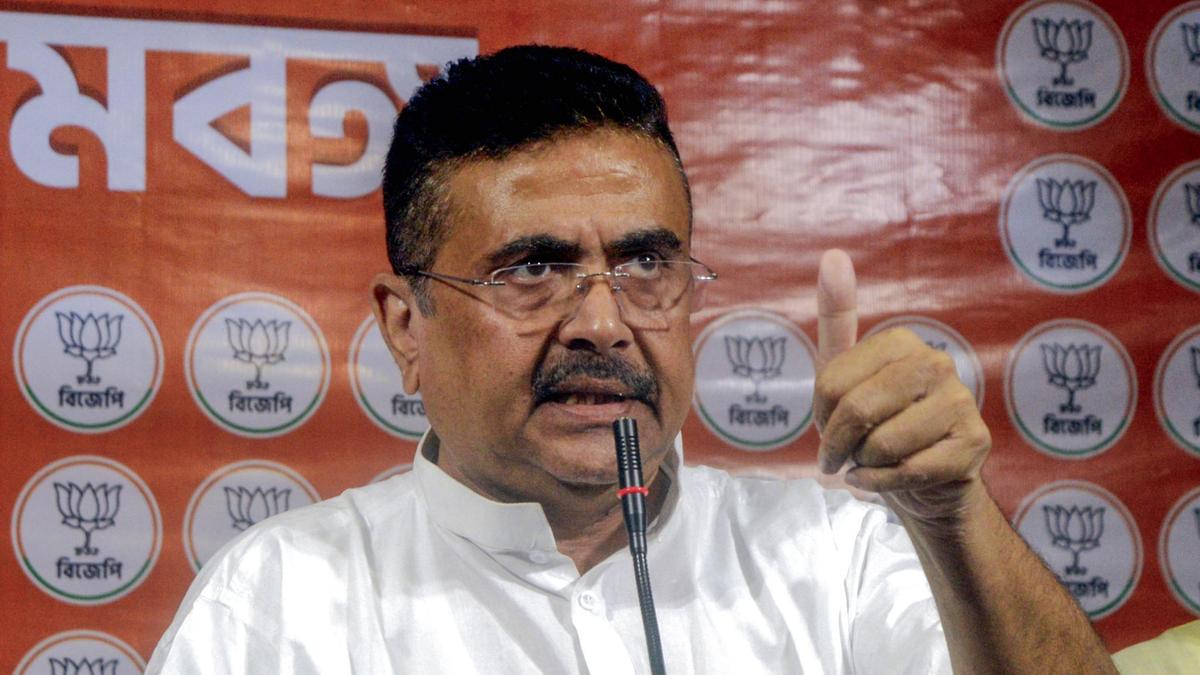
One of the leaders seen in the videos was Suvendu Adhikari. At that time, he was a senior TMC leader and close to Mamata Banerjee.
The videos created massive controversy across India. BJP leaders strongly attacked TMC and used the sting videos during election campaigns in West Bengal. Multiple news reports and archived videos show BJP publicly highlighting the footage in 2016.
BJP’s Attack On Suvendu Adhikari In 2016
During the 2016 Bengal elections, BJP repeatedly accused TMC leaders of corruption using Narada videos as political ammunition.
Several reports mention that BJP leaders publicly displayed and circulated the sting footage. The controversy became one of the biggest anti-corruption narratives against Mamata Banerjee’s government.
At that time, BJP supporters online and political speakers described the leaders seen in the videos as corrupt and demanded action.
What Changed Later?
In December 2020, Suvendu Adhikari left TMC and joined BJP in the presence of Amit Shah.
Soon after his entry into BJP, controversy erupted again because reports claimed BJP removed Narada sting videos from some of its official platforms and YouTube channels. Bengali newspaper Anandabazar Patrika reported that the Narada-related videos were removed after Suvendu joined BJP.
This triggered criticism from opposition parties and social media users, who accused BJP of selective anti-corruption politics. Critics started using the phrase “washing machine politics,” suggesting that politicians accused of corruption become “clean” after joining BJP.
Even journalist Mathew Samuel, who conducted the Narada sting operation, publicly questioned why action was taken against some accused politicians while Suvendu Adhikari was not arrested after joining BJP.
Suvendu Adhikari’s Rise Inside BJP
After joining BJP, Suvendu Adhikari became one of the biggest faces of the party in West Bengal. He defeated Mamata Banerjee in Nandigram during the 2021 election and later became Leader of Opposition.
In 2026, BJP achieved a historic victory in West Bengal, and Suvendu Adhikari became Chief Minister of the state.
This political rise revived debates around the Narada case because old videos and speeches from 2016 again started circulating online.
Himanta Biswa Sarma And Similar Allegations
Himanta Biswa Sarma is another BJP leader often mentioned in these debates.
Before joining BJP in 2015, Himanta Biswa Sarma was a senior Congress leader in Assam. Congress leaders and BJP politicians had earlier accused him of corruption and scams during his Congress years.

After joining BJP, he rapidly rose inside the party and eventually became Chief Minister of Assam. Critics again used the phrase “washing machine politics,” arguing that corruption allegations become politically irrelevant once leaders join BJP.
However, it is important to note that allegations made by political rivals are not automatically proof of guilt unless established in court.
Why The “Religion Over Corruption” Debate Exists
Many political critics argue that modern Indian politics has shifted heavily toward identity and religious polarization.
According to these critics, corruption allegations often stop mattering if a politician strongly supports Hindutva or aligns with BJP’s ideological politics. They claim voters today prioritize religious identity, nationalism, and political narratives over accountability and corruption issues.
Supporters of BJP strongly reject this accusation. They argue that opposition parties selectively raise corruption issues only for political attacks while ignoring corruption within their own parties.
This debate has become one of the central political discussions in India today.
The Bigger Political Question
The Suvendu Adhikari controversy represents a larger question in Indian politics:
- Do corruption allegations matter equally for all parties?
- Are investigations politically selective?
- Do political defections protect leaders from scrutiny?
- Has ideology become more important than accountability?
These questions continue to dominate political discussions across India.