

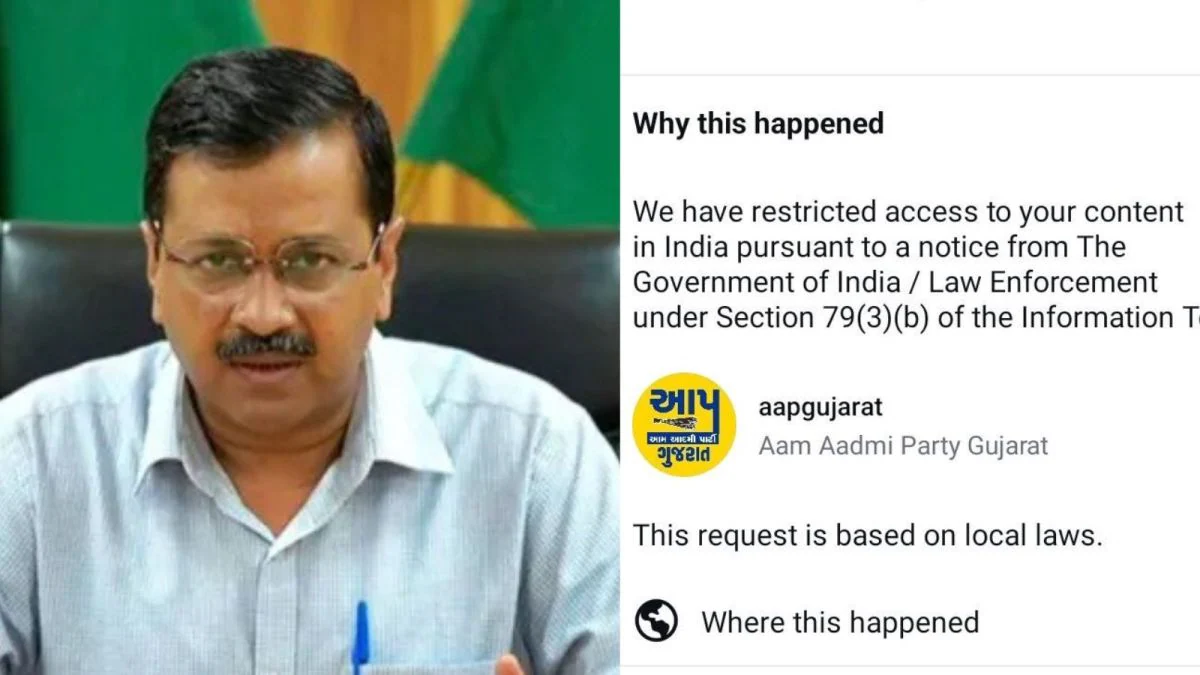
A New Flashpoint in India’s Online Space
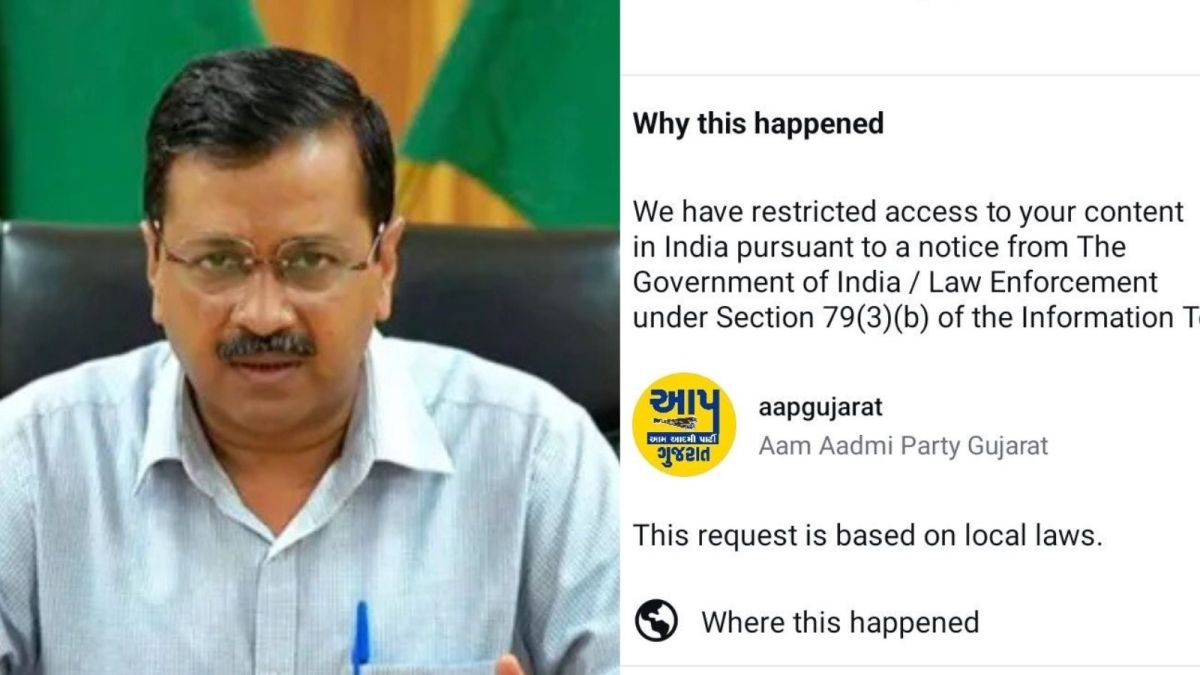
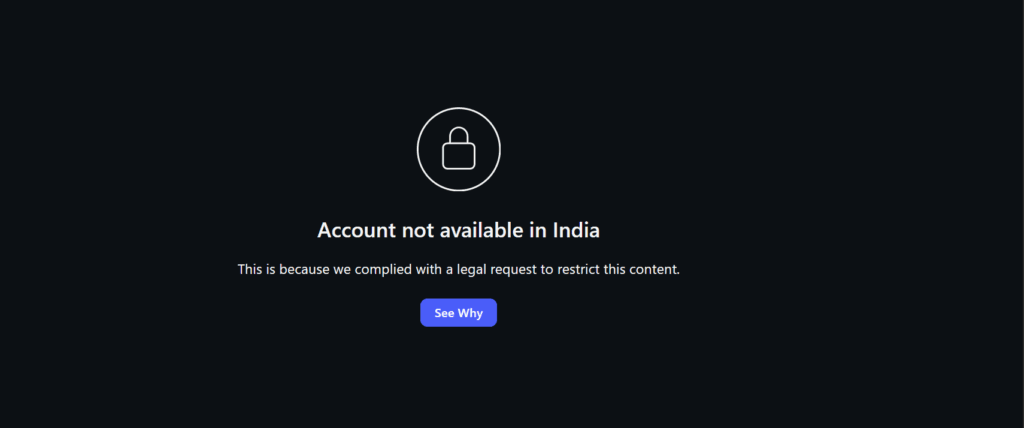
A fresh controversy has emerged after Aam Aadmi Party’s Gujarat social media pages were found inaccessible within India. Users reported seeing the familiar notice: “Content not available in your country due to a legal request.”
This is not the first time such restrictions have sparked debate. Over the past few years, multiple accounts across political, activist, and commentary spaces have faced temporary or permanent blocks inside India. Each case has triggered the same question: is this regulation, or is it suppression?
Beyond One Case: A Pattern People Are Talking About
The AAP Gujarat case has gained attention because it fits into a larger pattern people are noticing:
- Certain political or critical accounts become unavailable in India
- Posts get withheld under “legal request” notices
- Entire pages sometimes disappear locally but remain visible globally
At the same time, some users claim that rationalist voices, critics, or politically sensitive content creators have also faced similar restrictions in the past.
However, it is important to note that each case has different legal and factual contexts, and not all are connected.
How Social Media Blocking Actually Works in India
India has a legal framework that allows authorities to request content removal or restriction.
Key points:
- Platforms like Facebook, Instagram, and X must follow local laws
- Government agencies can issue legal orders to block content
- Platforms may withhold content only within India, not globally
This is why users often see content available outside India but blocked inside the country.
This process is not unique to India. Many countries use similar legal mechanisms.
Where the Controversy Begins
The problem is not just that content is blocked. It is how little is explained.
In most cases:
- The exact reason is not made public
- The specific post or violation is unclear
- Users are not given detailed justification
This lack of transparency creates space for political interpretation and public distrust.
AAP’s Claim vs Broader Reality
In the Gujarat case, AAP leaders have suggested that the restriction could be linked to political pressure or suppression of opposition voices.
On the other side, the general counter-argument is:
- Platforms act on legal compliance
- Content may violate specific rules or laws
- Restrictions are procedural, not political
The truth is, without full disclosure, both claims remain partially unverified.
Are “Rationalist Accounts” Being Targeted
There is a widespread perception online that rationalist or critical voices are being restricted.
But evidence here is mixed:
- Some accounts have indeed been blocked or withheld
- Others continue to operate freely and actively criticize government and society
- There is no single official list confirming targeted action against a specific ideology
So while the concern exists, it is not conclusively proven as a coordinated pattern.
Is India Becoming a “Controlled Internet” System
This is where the debate becomes emotional.
India today still has:
- Open access to global platforms
- Active political opposition online
- Independent media and criticism
- Millions of users freely expressing views
At the same time:
- Content regulation has increased
- Legal intervention in digital space is more frequent
- Platform compliance with authorities is stronger than before
So the reality is not black and white.
The Real Issue: Transparency and Trust
The biggest concern is not just blocking. It is lack of clarity.
People are asking:
- Who decides what gets blocked
- On what legal basis
- Why explanations are not public
Until these questions are answered clearly, every new case will look like suppression to some and regulation to others.
The blocking of AAP’s Gujarat pages has once again highlighted a deeper issue in India’s digital space.
This is not just about one party or one page.
It is about how digital control, law, and political perception intersect.
India is not a closed system. But it is also not as unrestricted as it once was.
So the real question remains:
Is this the normal evolution of digital law, or the beginning of tighter control?