
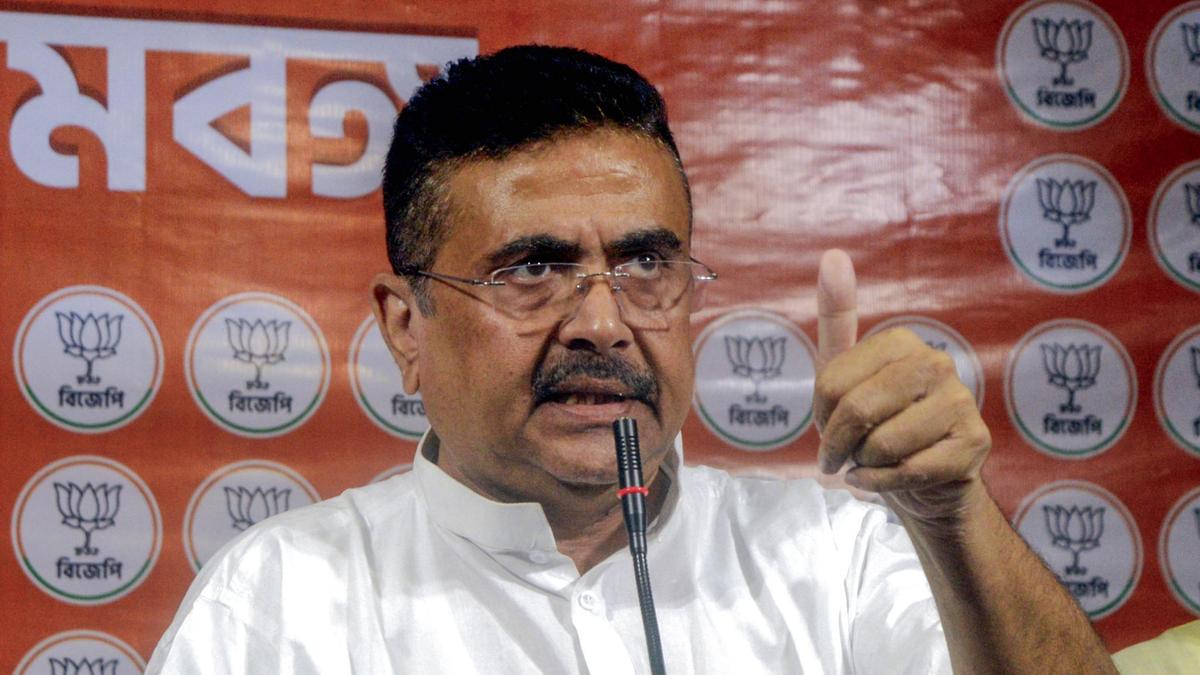
The strict enforcement of the West Bengal Animal Slaughter Control Act, 1950, ahead of Eid al-Adha has triggered a heated debate across West Bengal. The newly elected BJP government, led by Suvendu Adhikari, has intensified implementation of the law, resulting in significant disruption in cattle markets and concern among thousands of livestock farmers and traders who depend on seasonal cattle sales for their livelihood.

For decades, cattle trading has formed an important part of the rural economy. Many dairy farmers raise cattle for milk production and agricultural purposes. Once animals become old, non-productive, or economically difficult to maintain, farmers often sell them through local cattle markets. According to farmers and traders, a substantial portion of this trade has traditionally involved transactions between Hindu cattle owners and Muslim buyers, creating an economic cycle that supported both communities.
This year, however, many cattle traders report a sharp decline in market activity. Farmers claim that stricter regulations, increased scrutiny, and fear of legal complications have discouraged many buyers from participating in livestock markets. As a result, large numbers of cattle remain unsold, leaving farmers struggling with mounting expenses.
Under the West Bengal Animal Slaughter Control Act, slaughter is permitted only for cattle above 14 years of age or animals certified as permanently unfit. The law also requires a joint fit-for-slaughter certificate issued by local authorities and veterinary officers before legal slaughter can take place.
Supporters of the government’s action argue that the law has existed for decades and that enforcing existing legislation is necessary for proper governance and animal welfare. Critics, however, argue that sudden and strict implementation has created unintended consequences for rural livelihoods.
Economic Pressure on Rural Farmers
The financial burden on cattle owners is becoming a major concern. Farmers say maintaining non-productive cattle involves significant daily expenses, including fodder, veterinary care, shelter, and transportation costs. According to several farmer organizations, these expenses can become overwhelming for small and marginal farmers who already operate under debt.
Many dairy farmers had reportedly taken loans expecting seasonal cattle sales during the Eid market period. With trade slowing significantly, many now find themselves unable to recover their investments.
Several local media reports and farmer groups have alleged that financial distress among livestock owners has intensified in recent months. Such claims remain the subject of public debate, and any reported suicide cases should be verified through official records and credible reporting before being presented as established fact.
The Historical Debate: What Savarkar Said About Cow Worship
The controversy has also revived discussion about the views of Vinayak Damodar Savarkar, one of the principal ideologues associated with Hindutva.
Savarkar took a position on cow worship that differed significantly from many contemporary Hindu nationalist narratives. He argued that cows should be respected as economically useful animals but opposed treating them as divine figures.
One of the most frequently cited statements attributed to Savarkar.
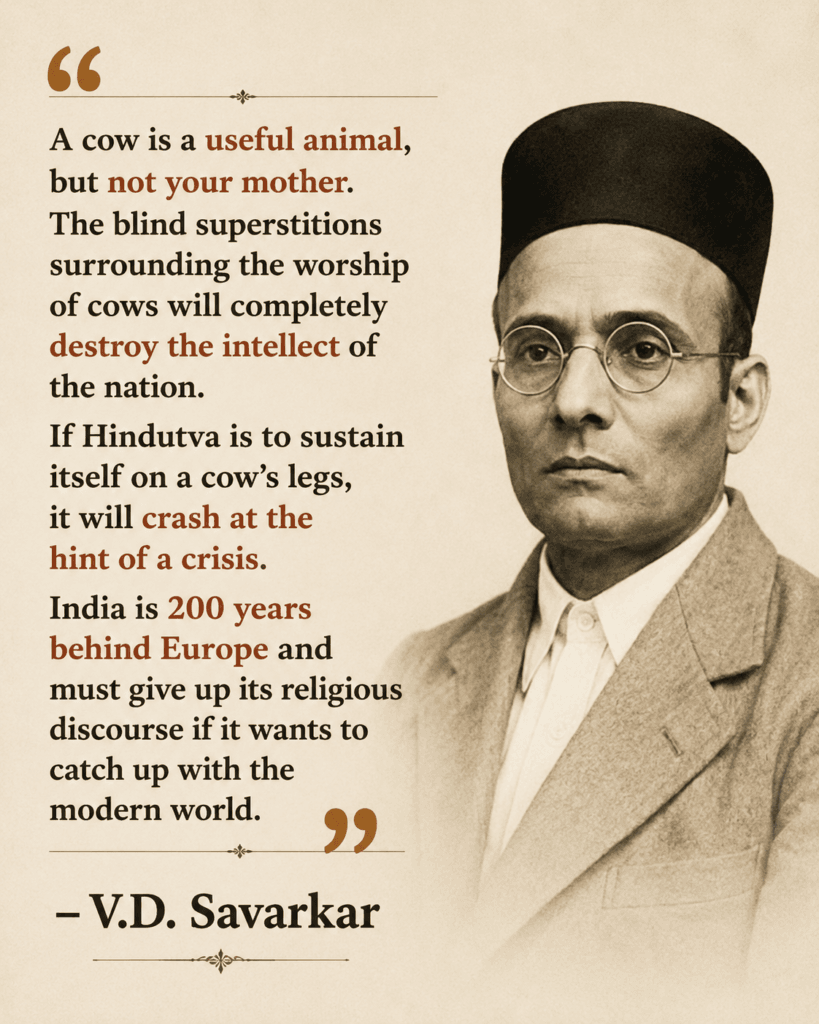
Savarkar argued that excessive religious sentiment surrounding cows could hinder scientific thinking and economic progress. He believed national development should be guided by rationalism, science, and practical considerations rather than religious superstition.
According to Savarkar’s writings, cattle should be protected when economically beneficial to society, but public policy should be based on agricultural and economic realities rather than religious symbolism alone.
His position continues to generate debate because many political groups that invoke his legacy today advocate strong cow protection policies, while critics point out that Savarkar himself often approached the issue from a pragmatic rather than purely religious perspective.
A Larger Political Question
The controversy in West Bengal extends beyond cattle markets. It reflects a broader national debate about the relationship between religion, law, economics, and public policy.
Supporters of strict cattle protection laws view them as essential for preserving cultural traditions and preventing illegal slaughter. Opponents argue that such policies can negatively affect farmers, traders, leather workers, transporters, and others whose livelihoods depend on the livestock economy.
The current situation has raised questions about whether governments should prioritize cultural concerns, economic realities, or attempt to balance both.
As West Bengal’s cattle markets continue to struggle, the dispute highlights the complex intersection of religion, agriculture, economics, and politics in modern India. Farmers are demanding practical solutions, easier regulatory procedures, and financial support, while political parties continue to debate the broader ideological implications of cattle protection policies.
Whether the current approach ultimately protects rural communities or deepens their economic hardship remains a subject of intense public discussion. At the center of that discussion are the farmers themselves, whose livelihoods depend on policies that affect the movement, sale, and maintenance of livestock across the state.