
For visitors arriving in Tamil Nadu from many other parts of India, one small cultural difference becomes noticeable almost immediately.
People introduce themselves differently.

In states across northern and western India, surnames often reveal caste instantly. A single word attached to a person’s name can communicate generations of inherited hierarchy, social location, political influence, and even assumptions about status before a conversation properly begins. In villages and cities alike, caste surnames continue to function as social signals woven deeply into everyday life.
But in Tamil Nadu, many people simply introduce themselves through personal names or initials.
No caste title.
No inherited clan marker.
No public declaration of hierarchy.
Not always, of course. Tamil Nadu is not a caste-free society. Far from it. But compared to large parts of India, the public visibility of caste identity became noticeably weaker over the last century.
That transformation did not happen naturally. It was political, cultural, ideological, and deeply deliberate.
And today, as social media increasingly turns caste identity into digital branding, Tamil Nadu’s long anti-caste social experiment is once again attracting national attention.
A Name In India Is Rarely Just A Name
In modern India, surnames still carry enormous social weight.
They influence marriage negotiations, political mobilization, community networks, housing access, local influence, and sometimes employment opportunities. Even in supposedly modern urban environments, caste identifiers continue operating silently beneath the surface of everyday interaction.
On social media, however, caste identity is no longer silent.
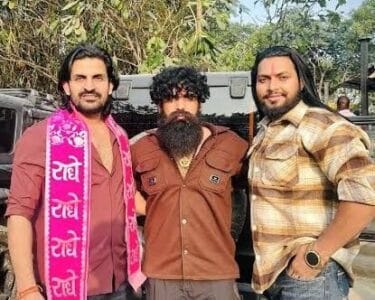
Across Instagram, YouTube, Facebook, and short-video platforms, caste branding has evolved into online performance culture. Usernames proudly advertise caste identity. Luxury vehicles carry caste stickers across rear windshields. Influencers produce cinematic “attitude edits” celebrating hereditary pride with dramatic music, weapons, political flags, and masculine imagery.
Entire online ecosystems now revolve around caste-centered identity performance.
“Rajputana pride.”
“Jaat blood.”
“Brahmin power.”
“Maratha warrior.”
“Thakur lifestyle.”
What older generations often expressed quietly through social hierarchy is now increasingly performed publicly through digital culture.


Sociologists observing this phenomenon say the internet rewards visible identity because identity generates engagement. Algorithms amplify emotional content, group belonging, masculinity symbolism, and tribal performance. In this environment, caste identity becomes not merely social structure but marketable online culture.
And that is precisely what makes Tamil Nadu’s trajectory so unusual.
Because nearly a century ago, Tamil society began attempting something radically different: reducing the public importance of caste identity itself.
The Radical Politics Of Removing A Surname
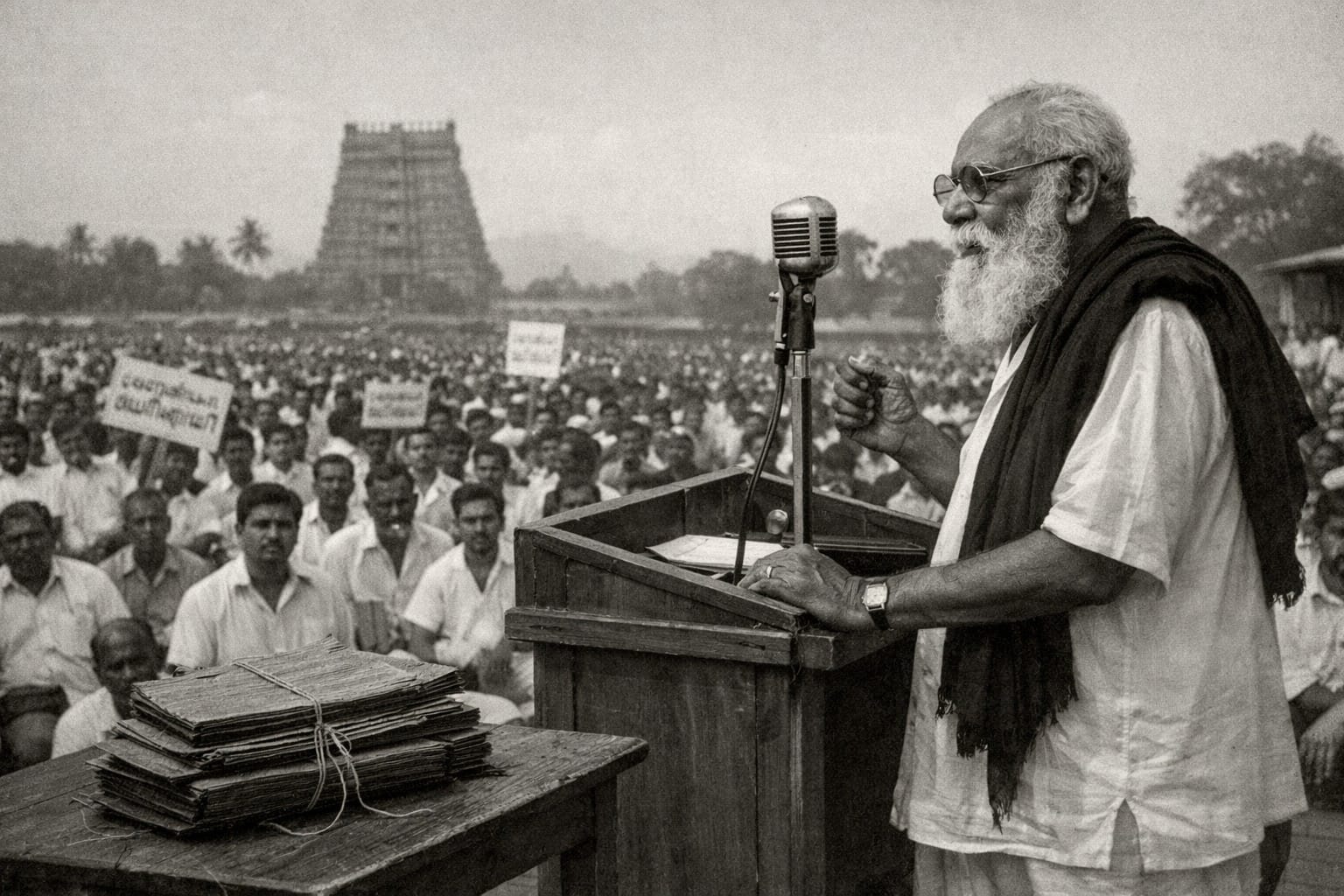
The origins of this transformation can largely be traced back to the Self-Respect Movement founded in the 1920s by Periyar E. V. Ramasamy.
Periyar was not simply criticizing caste discrimination. He was attacking the everyday cultural systems that allowed caste to survive psychologically across generations.
In his view, caste remained powerful not only because of violence or economic inequality, but because society normalized caste every single day through rituals, names, customs, religion, marriage systems, and inherited social prestige.
A surname itself, Periyar argued, functioned as a permanent social label.
The moment someone introduced themselves, society already began placing them into a hierarchy.
That hierarchy entered classrooms, workplaces, temples, marriage discussions, political networks, and bureaucratic systems. Caste remained alive because people continuously carried caste markers into public life.
The Self-Respect Movement therefore encouraged Tamilians to reject caste surnames altogether. Instead, many people began using initials, personal names, or their father’s name.
At the time, this was not a cosmetic cultural shift. It was a direct political challenge to hereditary hierarchy.

Historians say the movement fundamentally changed how identity was imagined in public space. It attempted to separate social dignity from inherited caste titles.
Over decades, this ideology spread through Tamil politics, cinema, literature, education, and popular culture.
The impact was gradual but profound.
Today, many public figures from Tamil Nadu are widely recognized without caste-centered naming conventions. Actors like Rajinikanth, Vijay, Kamal Haasan, Ajith Kumar, and actresses like Sai Pallavi became household names without heavily emphasizing caste identity in their public image.
This may appear symbolic. But symbols shape social psychology.
Children growing up in such an environment repeatedly encounter fame, success, intelligence, and cultural prestige detached from caste surnames. Over time, that changes how society imagines status itself.
Tamil Nadu Did Not Destroy Caste. But It Changed Its Visibility.
It is important not to romanticize the situation.
Tamil Nadu still experiences caste violence.
Honor killings still occur.
Political parties continue mobilizing caste blocs.
Dalit activists continue documenting discrimination in housing, education, and rural social structures.
Yet many researchers argue Tamil Nadu achieved something culturally significant even without eliminating caste entirely.
It reduced the public prestige attached to openly displaying caste identity.
That distinction matters enormously.
In several parts of India, caste assertion remains associated with power, masculinity, local dominance, and inherited influence. Public display itself becomes a performance of authority.
Tamil Nadu’s Dravidian political culture spent decades attempting to reverse that social psychology. Public caste pride was increasingly portrayed not as modern or prestigious, but as socially regressive and irrational.
That message spread not only through politics but through mass culture.
Tamil cinema frequently incorporated themes of rationalism, anti-Brahminism, self-respect, social equality, and criticism of hereditary hierarchy. Political speeches, magazines, television debates, student organizations, and public education reinforced similar narratives for generations.

The result was not the disappearance of caste, but the weakening of its public celebration.
And in sociology, visibility matters.
When societies repeatedly normalize identity markers, those markers gain legitimacy. When societies reduce their public visibility, their symbolic power can gradually weaken over time.
Tamil Nadu’s political culture consciously attempted that process for nearly a century.
Kerala Followed A Different Route
Kerala experienced a somewhat similar transformation, though through different historical pathways.
Social reformers such as Sree Narayana Guru, Ayyankali, and Chattampi Swamikal challenged caste exclusion, untouchability, and rigid social hierarchy during the late 19th and early 20th centuries.
But Kerala did not experience one centralized anti-surname campaign like Tamil Nadu.
Instead, its transformation emerged gradually through literacy expansion, land reforms, education, left-wing political movements, and social reform activism.
Many Malayalis today commonly use initials, house names, or shortened naming structures rather than aggressively foregrounding caste identity in public life.
Again, not perfectly.
But noticeably compared to several other Indian states.

The Internet May Be Reversing Older Social Reforms
What makes modern India particularly fascinating is that digital culture may now be reviving many identity structures earlier reformers tried to weaken.
The internet thrives on visibility.
And caste is highly visible.
Identity creates tribal belonging. Tribal belonging generates engagement. Engagement feeds algorithms. Algorithms reward repetition.
The result is a new form of caste consciousness shaped less by traditional village structures and more by digital performance.
Today, caste identity increasingly appears as aesthetic branding.
SUV stickers.
Instagram biographies.
Political fan pages.
Music videos.
YouTube edits.
Short-form “attitude reels.”
In some regions, caste identity has effectively merged with influencer culture.
Some scholars argue this phenomenon represents the modernization of caste rather than its disappearance. Instead of fading away under urbanization and technology, caste has adapted itself into digital-era identity politics.
Even anti-caste assertion movements sometimes become absorbed into online performance systems driven by visibility and engagement metrics.
The deeper problem, critics argue, is that Indian society still struggles to imagine social identity beyond caste consciousness itself.
Bihar’s Sticker Crackdown Reopened The National Debate
The debate recently resurfaced nationally after Bihar moved against caste-related vehicle stickers and slogans, warning violators of financial penalties.
Supporters argued that roads should not become moving advertisements for caste dominance and intimidation.
Critics responded that symbolic actions alone cannot dismantle structural inequality or centuries of social exclusion.
But the controversy exposed something deeper beneath the headlines.
India still has not collectively decided whether caste should remain a permanent public identity in modern democratic life.
Tamil Nadu’s century-long social experiment suggests public culture can change when institutions, cinema, politics, and education consciously reduce the visibility of inherited hierarchy.
But the internet now appears to be pushing India in the opposite direction.
The Unfinished Experiment
Tamil Nadu did not create a utopia.
Its anti-caste project remains incomplete, contradictory, and contested even today.
Yet the state undeniably altered how millions of people publicly imagine identity itself.
That may ultimately become its most significant social achievement.
Nearly one hundred years ago, Tamil society began experimenting with a radical idea: reducing the importance of inherited identity in public life.
Not through silence.
Not through denial.
But through long-term cultural transformation.
And even today, that transformation remains visible every time someone introduces themselves simply by their name rather than through a caste title.
At a moment when caste increasingly returns as digital branding, online masculinity culture, and algorithmic identity performance, Tamil Nadu’s old social experiment suddenly feels less like history and more like a warning about the future of India itself.
Support Independent Journalism
If you like our work and value deep, honest, and unfiltered reporting like this, consider supporting us. Your contribution helps us continue independent journalism.