
A country that celebrates loudly, but manages poorly
India is known for its festivals, public energy, and mass participation. From Ambedkar Jayanti to Ganpati, from Ram Navami to Eid, from political rallies to wedding processions, the streets often become the center of activity. At first glance, this looks like cultural strength. But when you look deeper, it reveals a serious civic problem.
Public roads are not designed for uncontrolled gatherings. They are meant for movement, access, and daily life. Yet across Indian cities, roads are repeatedly blocked for hours, sometimes entire days, without proper planning, discipline, or accountability. This is not an isolated issue. It is a pattern.
Ambedkar Jayanti: Celebration turning into congestion


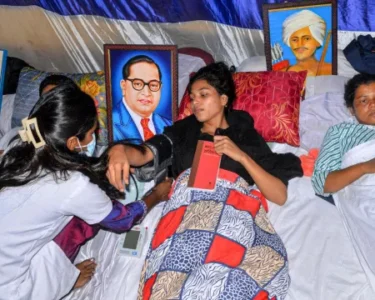
Ambedkar Jayanti is an important day, marking the birth anniversary of Dr. B.R. Ambedkar. It carries deep social and historical meaning. But in many cities, the way it is celebrated raises questions.
Large processions with DJs, loud music, and dancing crowds often occupy major roads. Traffic slows down or completely stops. In some areas, there is little coordination with local authorities. The result is chaos for commuters who have nothing to do with the event.
Respecting Ambedkar’s legacy should also include respecting public order. But that connection is often missing.
Chhatrapati Shivaji Maharaj Jayanti: Pride without planning


Chhatrapati Shivaji Maharaj Jayanti is celebrated with pride, especially in Maharashtra. The processions are large, energetic, and emotionally charged. But again, the issue is not celebration, it is execution.
Motorbike rallies, loud DJs, and unregulated crowds often block key roads. In many cases, there is aggressive driving and poor crowd control. This turns a cultural celebration into a public inconvenience.
Pride should not come at the cost of discipline. But in reality, it often does.
Religious processions: Milad-un-Nabi, Muharram, Ram Navami, Eid


Religious events across communities show similar patterns. During Milad-un-Nabi, which marks the birth of Prophet Muhammad, large processions move through city roads with banners and loudspeakers. During Muharram, tazia processions occupy streets for long durations. Ram Navami rallies also involve large crowds, music, and road blockages. Even during Eid, areas around mosques often see heavy congestion without proper management.
This is not about one religion. It is a shared problem across all communities.
When every group claims public roads for celebration, the system breaks down. The city cannot function if roads are treated as open event grounds without limits.
Ganpati and large-scale festivals: Days of disruption


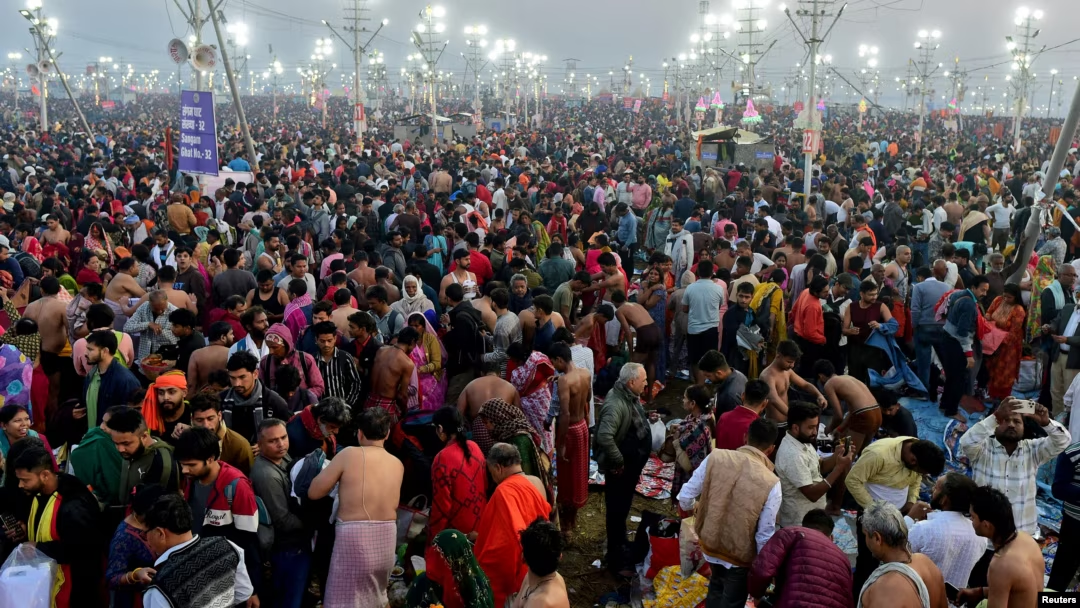
Ganpati is one of the biggest festivals in India, especially in Maharashtra. The immersion processions are massive. Entire roads are blocked for hours, sometimes late into the night.
Heavy trucks carrying idols, loud DJs, dancing crowds, and firecrackers create a complete breakdown of traffic systems. While authorities try to manage it, the scale often goes beyond control.
For participants, it is devotion. For others, it is disruption.
Weddings: Private events, public chaos


The problem is not limited to festivals or religion. Even private events like weddings contribute to the issue.
Baraat processions with DJs, dancing crowds, and vehicles often take over public roads. In narrow streets, this completely blocks movement. Loud music continues late into the night, creating noise pollution.
Unlike festivals, weddings are private celebrations. Yet they frequently use public space without consideration for others. This shows how deeply normalized this behavior has become.
Political rallies: Power over public convenience

If festivals and weddings disrupt occasionally, political rallies do it systematically.
During elections, major roads are blocked for rallies and roadshows. Leaders display crowd strength, often ignoring public inconvenience. Traffic diversions are poorly planned or communicated.
Here, the message is clear. Power takes priority over public convenience.
Noise pollution: The ignored crisis
Beyond traffic, there is another issue that people rarely discuss seriously. Noise.
DJs, loudspeakers, and firecrackers are used in almost every event. In many cases, sound levels go far beyond legal limits. Hospitals, schools, and residential areas are affected.
Noise pollution is not just an inconvenience. It impacts health, sleep, and mental well-being. Yet enforcement remains weak.
The uncomfortable truth
This is where the discussion becomes uncomfortable but necessary.
The problem is not lack of laws. The problem is behavior.
Across events, there is a common pattern:
- Public roads are treated as personal space
- Rules are ignored or weakly enforced
- Crowd behavior becomes uncontrolled
- Others’ inconvenience is not considered
This is not about illiteracy in the traditional sense. It is about civic awareness. A society can be educated and still lack civic discipline.
A modern country with outdated habits
India is rapidly modernizing. Digital systems, infrastructure, and urban growth are moving forward. But civic behavior has not kept the same pace.
A modern society is not just about technology. It is about how people behave in shared spaces.
Right now, that gap is visible on every blocked road, every traffic jam, and every uncontrolled gathering.
What needs to change
Solutions are not complicated, but they require seriousness.
Events must have strict permissions, fixed routes, and time limits. Roads should not be the default venue. Large grounds and designated spaces should be used. Noise limits must be enforced without exception.
Most importantly, rules must apply equally to everyone. No exceptions for religion, culture, politics, or private events.
Final question
India celebrates everything. That is its strength.
But when celebration starts harming everyday life, it becomes a problem.
The real question is simple.
Can India celebrate without disrupting itself?
Until that answer changes, the reality will remain the same. Crowded roads, endless traffic, and a civic system that struggles to keep up.
Support Independent Journalism
If you like our work and value deep, honest, and unfiltered reporting like this, consider supporting us. Your contribution helps us continue independent journalism.