

When a Citizen Speaks and Power Files a Complaint
The story now begins not on a crowded Mumbai road, but with a complaint.
A confrontation during a traffic jam in Worli, involving a citizen and Maharashtra minister Girish Mahajan, might have remained another fleeting viral moment. Instead, it took a sharper turn when a complaint was reported to have been filed by Zen Sadavarte, daughter of Gunratna Sadavarte.
That decision changed the meaning of the incident. What began as visible public frustration is now framed as a legal question.
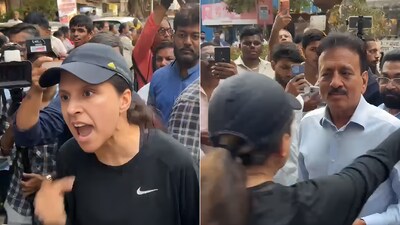
A short video from Mumbai has forced a familiar question back into public life: what happens when an ordinary citizen confronts power in a moment of frustration?
During a traffic disruption in Worli, a woman confronted Maharashtra minister Girish Mahajan. The exchange was sharp, emotional and, at points, abusive. Within hours, the clip spread widely. Soon after, a complaint was reported to have been filed by Zen Sadavarte, daughter of Gunratna Sadavarte.

Those are the basic, verifiable elements. Everything else now sits in the charged space between public anger and legal response.
The asymmetry everyone can see
For commuters, the experience is familiar. A political rally or convoy halts movement. Hours are lost. Plans collapse. People wait without clear information. The costs are private and immediate.
For those in office, such disruptions are often framed as unavoidable logistics of public life.
This gap matters. It creates an asymmetry: inconvenience flows one way, authority the other. When a citizen finally speaks out, it is rarely polite. It is usually blunt, sometimes crude, and often reflects accumulated frustration rather than a single moment.
The video from Worli fits that pattern. The woman did not deliver a measured statement. She vented. Many will disagree with her language. Few can deny the frustration behind it.
From confrontation to complaint
The decision to file a complaint shifts the frame. What was a moment of civic anger becomes a question of legality: public order, abusive speech, conduct on a roadway.
That is a legitimate domain for the law. Civility and safety matter. There are boundaries to speech and behavior in public spaces.
But the timing and target of enforcement also shape how the public reads such actions.
When a complaint appears to focus on the citizen who spoke out, rather than the conditions that provoked the confrontation, it can look selective. It can feel like a signal: speak carefully when power is present, or risk consequences.
This perception, whether intended or not, is what fuels the backlash.
The argument for restraint, and its limits
There is a straightforward counterpoint. Public discourse cannot normalize abuse. If every grievance is expressed through threats or insults, the result is not accountability but disorder. Officials, like any individual, are entitled to basic respect and safety.
This argument is not trivial. It is the foundation of any functioning public sphere.
Yet it also has limits. It asks citizens to maintain composure in situations where the system itself often shows little regard for their time or dignity. It demands restraint without always offering reciprocity.
That imbalance is what makes cases like this volatile.
Viral media, instant judgments
The clip’s rapid spread has compressed time. Opinions formed before facts were settled. Some hailed the woman as a voice of the people. Others condemned her conduct outright.
In this environment, a complaint can read as either a necessary corrective or an attempt to discipline dissent. The same action carries two opposite meanings depending on where one stands.
The risk is that nuance disappears. The public is pushed into choosing sides rather than examining the structure that produced the confrontation.
What this moment is really about
At its core, this episode is not about one woman or one complaint. It is about three overlapping questions:
- How should public authority manage the disruption it causes?
If political activity routinely halts cities, what obligations follow for those who authorize it? - What standard of speech is expected from citizens under stress?
Where is the line between legitimate anger and punishable conduct? - How is the law applied in moments of conflict between citizens and power?
Does enforcement appear even-handed, or does it seem to flow in one direction?
These are not new questions. But each viral incident renews them.
A clearer path forward
If there is a constructive way through, it lies in addressing both sides of the equation.
Authorities should recognize that public inconvenience is not a minor side effect. It is a central part of how citizens experience governance. Better planning, transparency and accountability during large events are not optional extras.
Citizens, for their part, should not have to choose between silence and escalation. There must be channels where grievances can be heard without the need for confrontation.
And the law, when invoked, should be seen to operate without preference. It should protect order without appearing to shield authority from criticism.
The cost of ignoring the signal
Moments like Worli are signals. They reveal pressure building in everyday life. Treating them only as isolated breaches of conduct misses the point.
If the response focuses solely on the words spoken, not the conditions that produced them, the underlying tension will return, often louder.
A citizen raised her voice in a traffic jam. A complaint followed. The episode will pass.
The question is whether anything will change before the next one.