
Remembering the Fearless Social Reformer on His Death Anniversary
On 17 June 1895, India lost one of its boldest intellectuals. He was only 39 years old. His name was Gopal Ganesh Agarkar.
More than a century later, his legacy continues to provoke debate, inspire reformers, and challenge deeply rooted social beliefs. While many Indians are familiar with names such as Bal Gangadhar Tilak, Mahatma Gandhi, Jyotirao Phule and Dr. B.R. Ambedkar, Agarkar often remains overlooked despite his immense contribution to modern Indian thought.
Yet in many ways, Agarkar was among the most radical voices of nineteenth-century India.
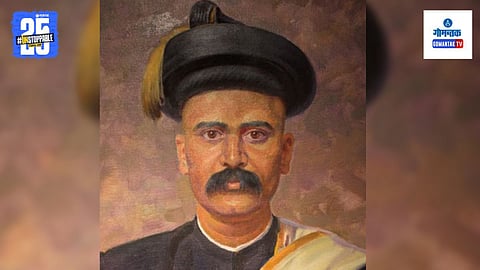
He questioned customs that society considered sacred. He challenged caste hierarchy at a time when doing so could invite social isolation. He argued for women’s rights when most people believed women should remain confined to traditional roles. He criticized superstition and religious orthodoxy when such criticism could damage one’s reputation and career.
Most importantly, he believed that no tradition should be above reason.
That belief defined his life.
Born Into a Changing India
Gopal Ganesh Agarkar was born on 14 July 1856 in Tembhu village in present-day Maharashtra.
India was undergoing enormous change. British colonial rule had reshaped political institutions, education systems and social structures. At the same time, Indian society remained burdened by deep inequalities, caste divisions and widespread social conservatism.
Agarkar grew up in a family with limited financial resources. Despite economic hardship, he displayed extraordinary academic ability from an early age.
Education became his path forward.
After completing his studies, he joined a generation of young Indians who believed that knowledge could transform society. Unlike many who viewed education merely as a means of employment, Agarkar saw it as a tool for intellectual liberation.
He believed that an educated population would become capable of questioning authority, challenging injustice and creating a more equal society.
Building Modern Education in India
Agarkar’s contribution to education is one of the most important chapters of his life.
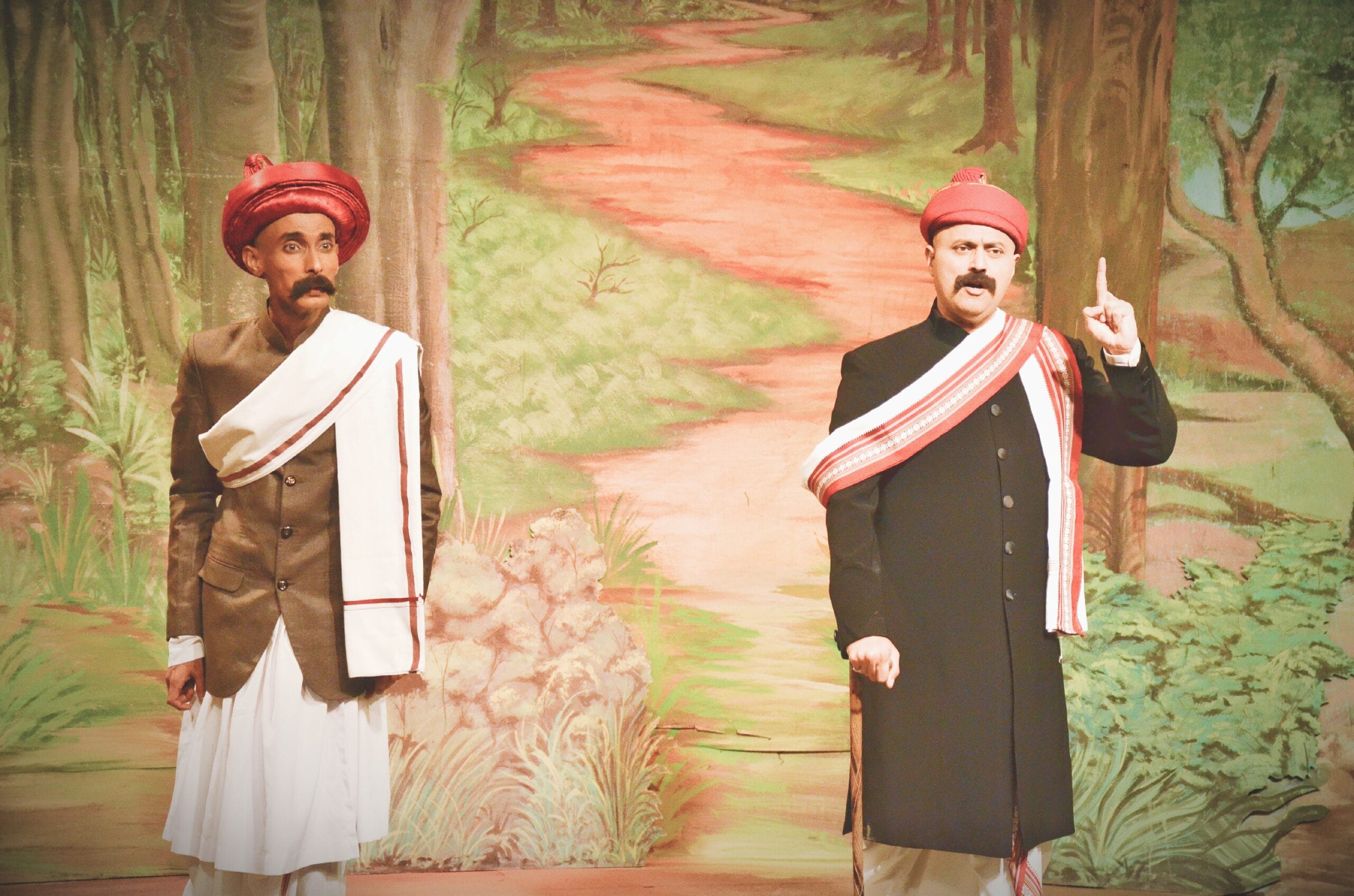
Together with Bal Gangadhar Tilak, Vishnushastri Chiplunkar and other reform-minded intellectuals, he helped establish the New English School in Pune.
The goal was ambitious.
They wanted Indians to receive quality education without relying entirely on colonial institutions.

This vision later led to the creation of the Deccan Education Society and Fergusson College, institutions that would produce generations of influential leaders, scholars and public figures.
Agarkar believed education should not simply produce clerks for the colonial administration.
He wanted schools and colleges to produce independent thinkers.
For him, the purpose of education was not obedience.
It was intellectual freedom.
Many of the educational values now considered normal, including critical thinking, scientific inquiry and questioning established beliefs, reflected principles that Agarkar championed more than a century ago.
Journalism as a Weapon for Reform
Agarkar understood the power of ideas.
He also understood that ideas need a platform.
This led him into journalism.
He became the first editor of Kesari, a newspaper that would later become one of the most influential publications in Maharashtra.
As editor, Agarkar used journalism not merely to report events but to shape public discussion.
He wrote about education, social reform, caste discrimination, women’s rights and the dangers of blind faith.
His writing style was direct, logical and uncompromising.
Unlike many public figures who carefully avoided controversy, Agarkar often walked directly into it.
He believed uncomfortable truths needed to be spoken openly.
That conviction would eventually lead to one of the most famous ideological conflicts in modern Indian history.
The Great Split: Agarkar and Tilak
Initially, Agarkar and Bal Gangadhar Tilak worked closely together.
Both were intelligent, patriotic and committed to India’s progress.
However, beneath their cooperation existed a profound philosophical disagreement.
The question was simple.
What should come first?
Political freedom or social reform?
Tilak believed that India’s primary objective should be liberation from British colonial rule. He argued that national unity was essential and that political independence should take priority.
Agarkar disagreed.
He believed that social reform was more urgent.
According to Agarkar, political independence would mean little if Indian society continued to be divided by caste oppression, gender inequality and superstition.
He argued that true freedom could not exist in a society where millions were denied dignity because of birth.
This disagreement gradually widened.
Eventually, it ended their partnership.
After leaving Kesari, Agarkar launched his own newspaper, Sudharak.
The name itself revealed his mission.
It means “The Reformer.”
Through Sudharak, Agarkar continued advocating for reason, equality and social transformation.
Agarkar’s War Against Caste
Perhaps no issue disturbed Agarkar more than caste discrimination.
He viewed caste hierarchy as a system that denied basic human dignity.
At a time when many accepted caste distinctions as natural or divinely ordained, Agarkar challenged the entire logic behind them.
He asked a simple but powerful question.
How can a person’s worth be determined by birth?
For Agarkar, intelligence, morality and character were not inherited through caste.
They were developed through education, effort and individual conduct.
He believed that caste divisions weakened Indian society and prevented genuine social unity.
Although born into a Brahmin family, he did not hesitate to criticize Brahminical privilege whenever he believed it contributed to injustice.
This willingness to criticize his own social group earned him both admiration and hostility.
His Battle Against Superstition
If caste was one obstacle to progress, superstition was another.
Agarkar believed that fear and irrationality held society back.
He criticized blind ritualism, unquestioned beliefs and practices that discouraged scientific thinking.
His argument was not merely philosophical.
He believed superstition had real-world consequences.
When people attribute every problem to fate, they stop seeking solutions.
When they fear questioning authority, they stop thinking independently.
When they accept claims without evidence, they become vulnerable to exploitation.
For Agarkar, scientific thinking was not an academic luxury.
It was a social necessity.
A Revolutionary Voice for Women’s Rights
Among Agarkar’s most progressive contributions were his views on women.
Many of his opinions remain remarkably modern even today.
At a time when women were often denied education, public participation and personal freedom, Agarkar argued that they deserved equal respect and opportunity.
He strongly supported female education.
He believed that society could never progress while half its population remained excluded from learning.
He opposed child marriage.
He supported widow remarriage.
He criticized customs that restricted women’s independence.
One of the most striking ideas associated with Agarkar was his rejection of rigid gender roles.
He argued that household responsibilities were not divinely assigned to women.
In his view, there was no rational basis for believing that cooking, cleaning, childcare or domestic work belonged exclusively to one gender.
For nineteenth-century India, such views were revolutionary.
Was Agarkar an Atheist?
This question continues to generate debate among historians.
There is little disagreement that Agarkar was a rationalist and critic of religious orthodoxy.
He consistently argued that beliefs should be tested through reason rather than accepted solely because of tradition.
Some modern writers describe him as an atheist.
Others prefer terms such as freethinker, secular humanist or rationalist.
What is beyond dispute is that Agarkar rejected blind faith and insisted that public life should be guided by reason and evidence.
His focus was less on attacking religion and more on challenging irrationality.
Why Agarkar Remains Relevant Today
More than 130 years after his death, Agarkar’s questions continue to resonate.
Should tradition be immune from criticism?
Can a society progress without scientific thinking?
How should caste discrimination be addressed?
What role should religion play in public life?
Are women truly equal in practice as well as in law?
These debates continue across modern India.
In many ways, Agarkar was discussing twenty-first century issues in the nineteenth century.
The Legacy He Left Behind
Gopal Ganesh Agarkar died on 17 June 1895.
He was only 39 years old.
Most public intellectuals require decades to build a legacy.
Agarkar accomplished it in less than four decades.
His influence can be seen in later movements promoting rationalism, scientific temper, women’s rights, educational reform and social equality.
His ideas contributed to an intellectual tradition that encouraged Indians to question authority rather than simply obey it.
That may be his greatest contribution.
He taught people that progress begins with asking difficult questions.
History often remembers political leaders more easily than social critics.
Political victories are visible.
Social transformation is slower.
Yet the ideas that shape a society frequently outlast governments, movements and elections.
Gopal Ganesh Agarkar belonged to that rare category of thinkers whose influence extended far beyond their lifetime.
He challenged caste when it was dangerous to do so.
He defended women’s rights when few were willing to speak for them.
He promoted education when ignorance was widespread.
He championed reason when superstition dominated public life.
And he did all of this while facing opposition from powerful sections of society.
More than a century after his death, Agarkar remains a symbol of intellectual courage.
His life reminds us that real reform often begins with a simple act:
The courage to question what everyone else accepts.